Imperial Prison
This deliverable is widely featured in the first graphic novel of ZARYA-3. Furthermore, the architectural style of this location will potentially impact the aesthetic language of other Imperial buildings and interiors.
A Place Where Hope Dies First
The first iteration of Object-117 was constructed for over 150 years ago by the decree of the Seventh Emperor. The prison was used to detain the military defectors, disloyal noblemen, and others who were suspected to be disloyal to his rule of terror.
Upon entering the walls of Object-117, prisoners were met by an eyeless veteran seaman—a deliberate choice. This disabled commoner served as a symbol of blind justice, a mocking contrast to the highborn backgrounds of many inmates.
Object-117 was closed and marked for demolition by the Ninth Emperor (Empress, really), who sought to eliminate all symbols of her grandfather’s tyranny by conducting a campaign of sweeping reforms. However, the revolutionary plans of the Ninth Emperor shifted dramatically after all her heirs were assassinated by Noble traitors.
Faced with personal tragedy and political unrest, the Ninth Emperor realized that sheer authority was not enough to govern the fractured Empire. In response, she declared martial law across the Capital city and deployed her Personal Bodyguard Division to apprehend all suspected Noble families and their affiliates.
Rather than burying the scandal with quiet executions, the Ninth Emperor made trials over traitors into a public affair. She transformed the Object-117 into a stage for dramatic judicial proceedings, followed by life imprisonment under harsh, punishing conditions for all conspirators and their families.
Such spectacle of justice resonated with the Imperial public, who viewed it as both an act of retribution and a warning. To memorialize the event and cement her authority, the Ninth Emperor did more than reopen the legendary prison—she ordered its complete transformation into a towering monument of power. Built in the style of by that time ultra-modern Utilitarian Brutalism.
In a final twist of irony, the redesign was entrusted to a Noble architect already imprisoned for her role in the conspiracy. The Architect agreed to the task after being promised that her grandchildren would be spared from immediate execution and granted a honorable exile.
The new design for Object-117 turned out to be just as haunting as it was intriguing: a 50-story, angular structure with no external decoration beyond sparse office windows and ventilation shafts. Inside, the building contained endless rows of suffocating cells—each one of them engineered specifically to erode the sanity of its occupant.
Externally, the gray silhouette of Object-117 resembled a colossal tombstone, not only for its prisoners but also for the Architect herself. According to rumor, she died of exhaustion shortly after completing the final design for the prison. In a symbolic act, her body was cemented within the jail’s foundation.
Under the rule of Thirteenth Emperor, the Imperial Prison still looms over the 37th District of the Imperial Capital as a stark relic of a more brutal era. While surrounding structures have been modernized to align with the Empire’s vision of a bright and sustainable future, the prison remains untouched—a menacing monolith of dark gray concrete.
Numerous critics have submitted petitions to the court, urging for the prison to be relocated off-world and the structure demolished. They describe it as a “depressive tombstone” that “casts a shadow of past oppression over the Capitol’s beauty.” Yet all such pleas have been summarily dismissed by the Thirteenth Emperor.
Beyond its role as a detention facility, the Imperial Prison serves a symbolic function. It stands as a constant reminder to the citizens of the Imperial Capital – a grim monument to the fate of those who defy Imperial rule. For the loyal, it is a deterrent; for the forgotten dissidents who perished within its walls, it is their final tombstone.
Brutalist Concrete Cloak With Naval Influences
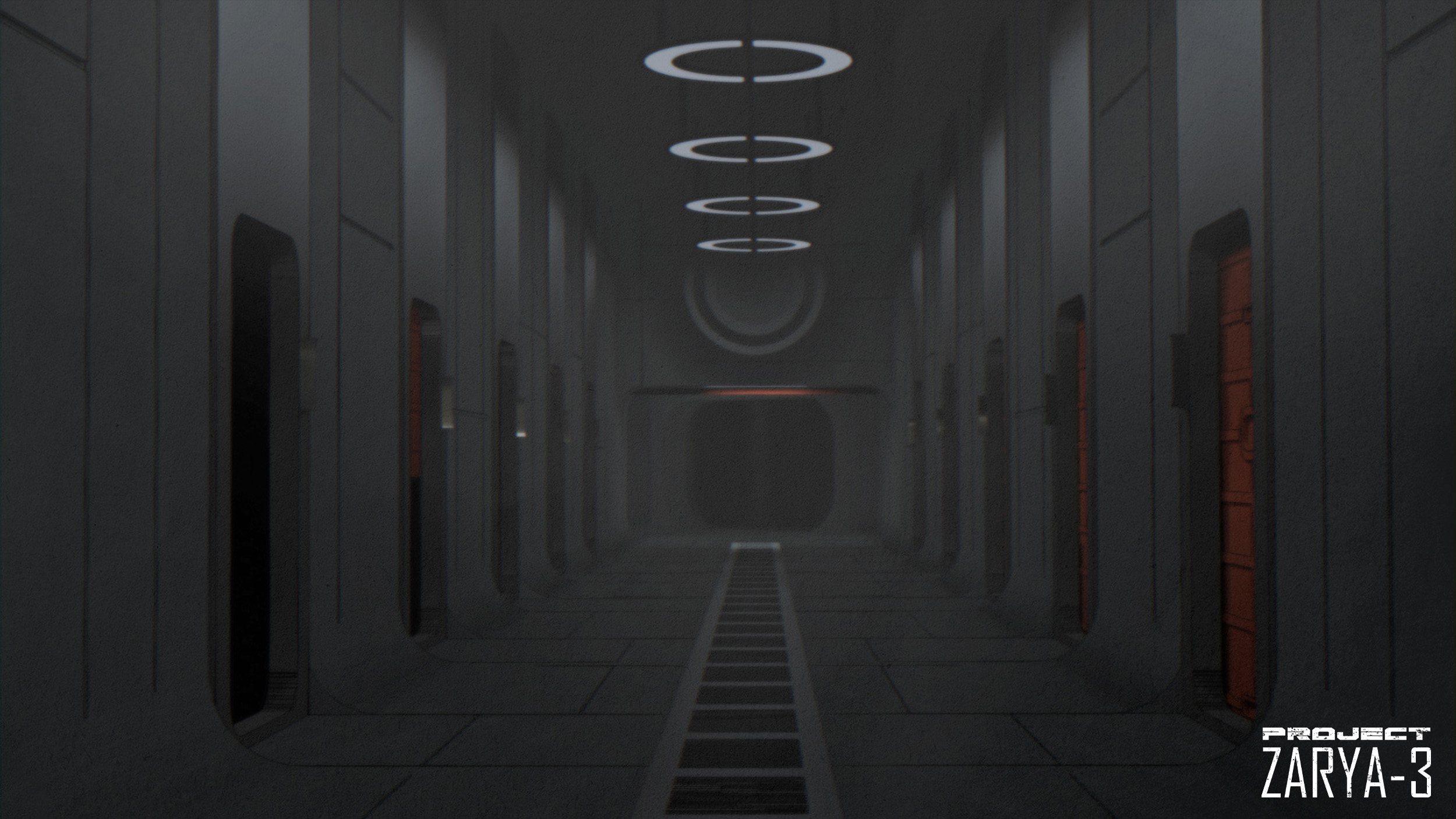
First inspiration for designing the interior of this prison came from the daunting simplicity of Soviet/Russian prisons, but instead of bright/colorful walls, I chose to proceed with more dark and thereby claustrophobic plain concrete. Choice of this material did also push me into exploration of brutalist architectural tradition in order to give me some clear means to supply this boring gray box of an interior with very Imperial rounded shapes… without making it unrealistically artsy, of course.
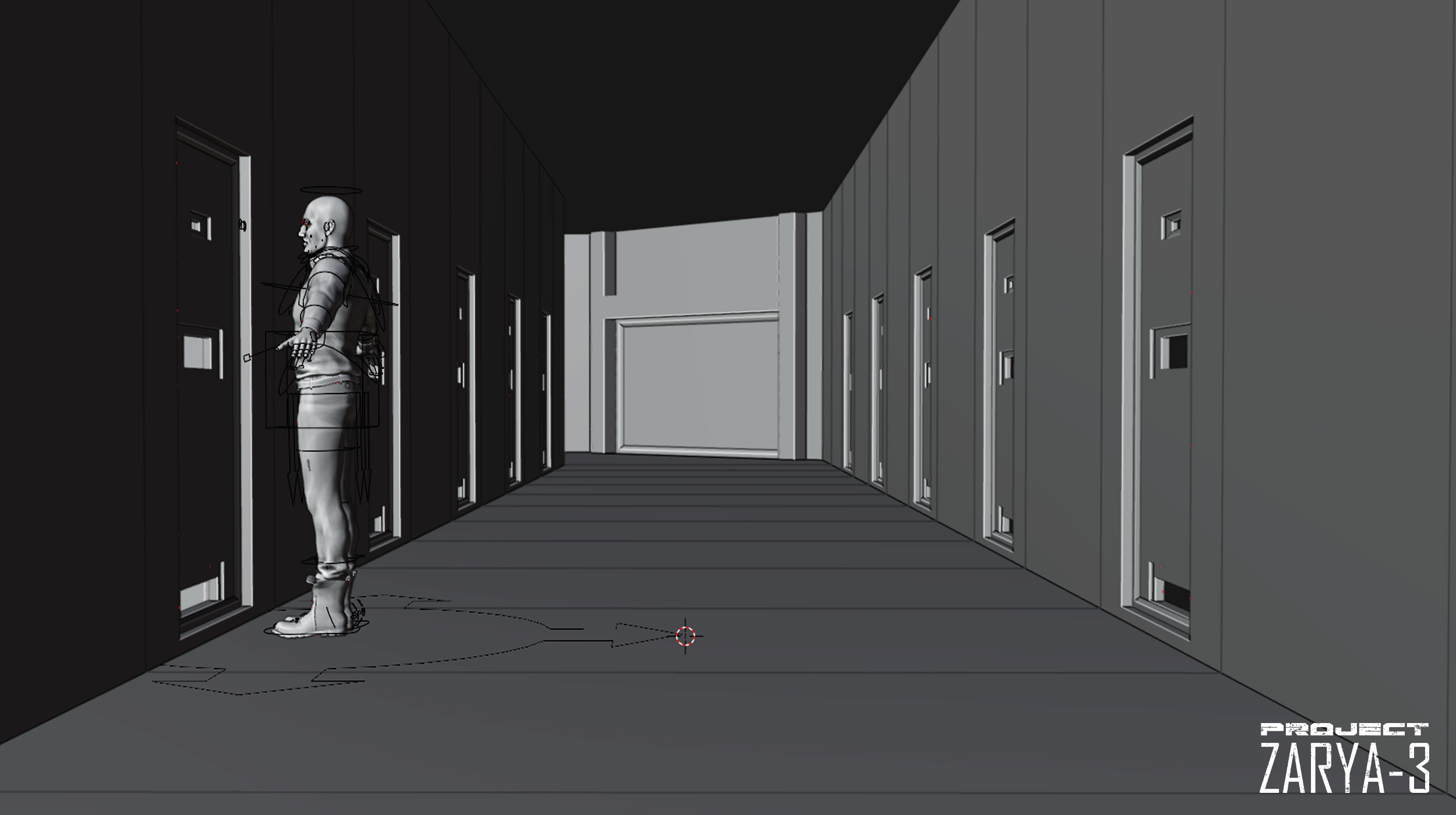
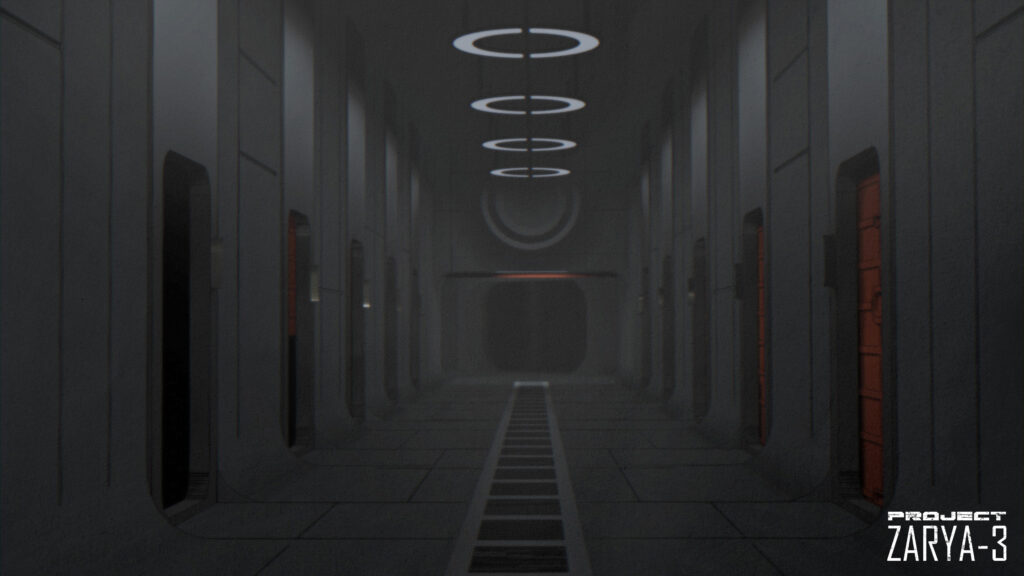
This way the first iteration of the prison interior featured few rounded corners and a large circular ventilation intake above the main gate at each floor.
To add a bit of color to the scene, I chose to paint all doors dark orange (later may be changed to rusty red) as a nod to some real life American prisons that love this color. The shape of the cell doors is oval (Because of the oval doorways) and in combination with visible creases and oval openings for conversation/cuffing/food delivery these look very similar to the doors of real life ships.
The exterior of this Prison on the other hand is fully inspired by 33 Thomas Street building from New York. Similarly to that concrete colossus this Prison looks like a tall rectangular black tombstone raised in one of the central districts of the Imperial capital.
Such contrast of matte black brutalist monument surrounded by the harmony of white-green “paradise” is meant to be a strict reminder for Imperials about the inevitable fate that meets all dissidents.
One Year to Think and One Evening to Make
Currently this location is near complete, but because of some narrative changes, further work on the exterior and some additional interior rooms is already planned.
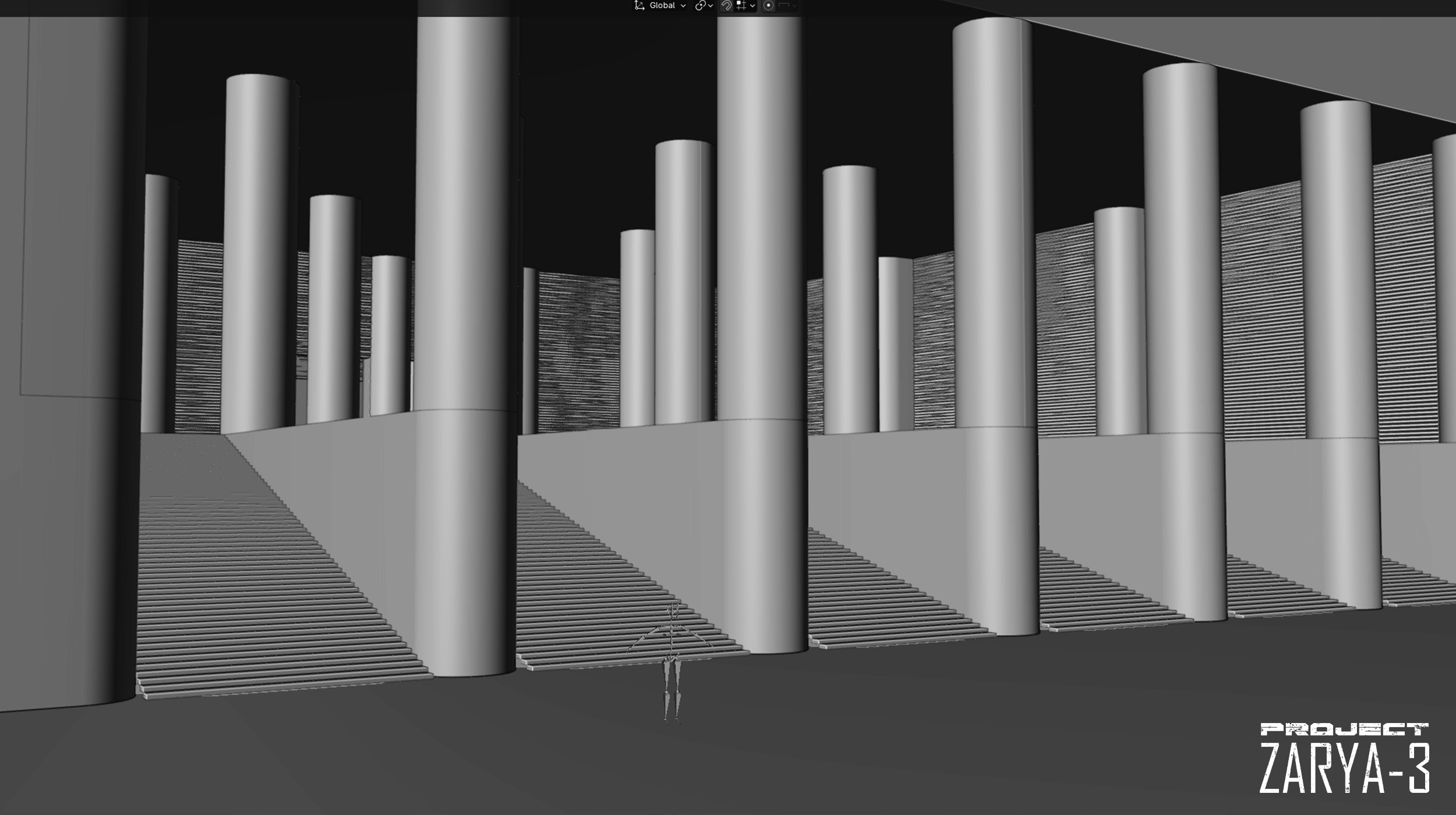
The exterior of this building has only one singular purpose – to intimidate by its impenetrable monolithic darkness and gargantuan size. Because of that the main staircase was designed with inclusion of gigantic columns that make any human silhouette look like a small and insignificant ant.
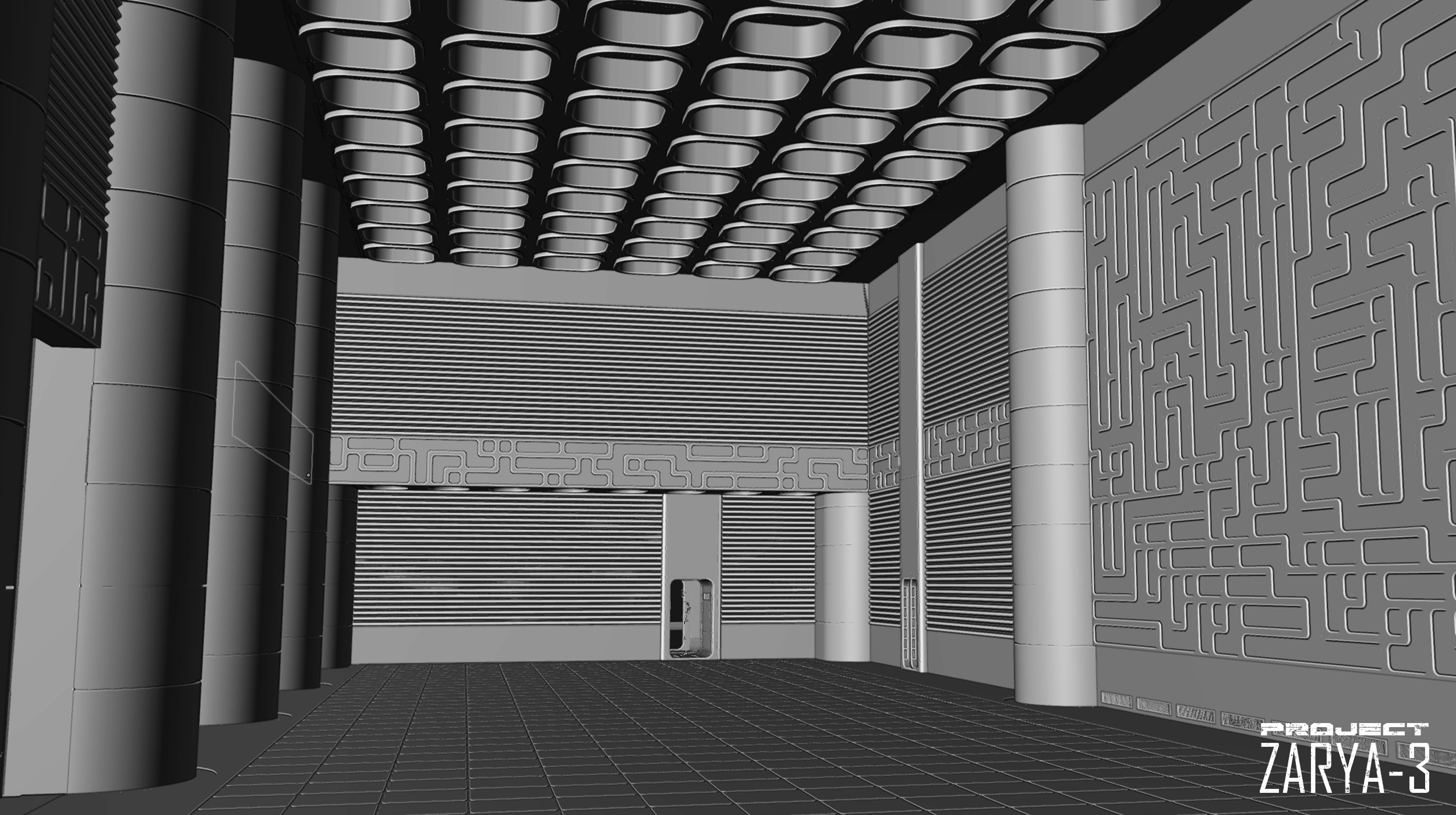
The Lobby area itself was at first designed as an ordinary lobby, but later was turned into a giant room with no reception or seats. Simply because all prisoners are being delivered to the object through underground communications and no external visitors are ever allowed. So the only remaining role for the lobby is to serve as a dark museum of this place.
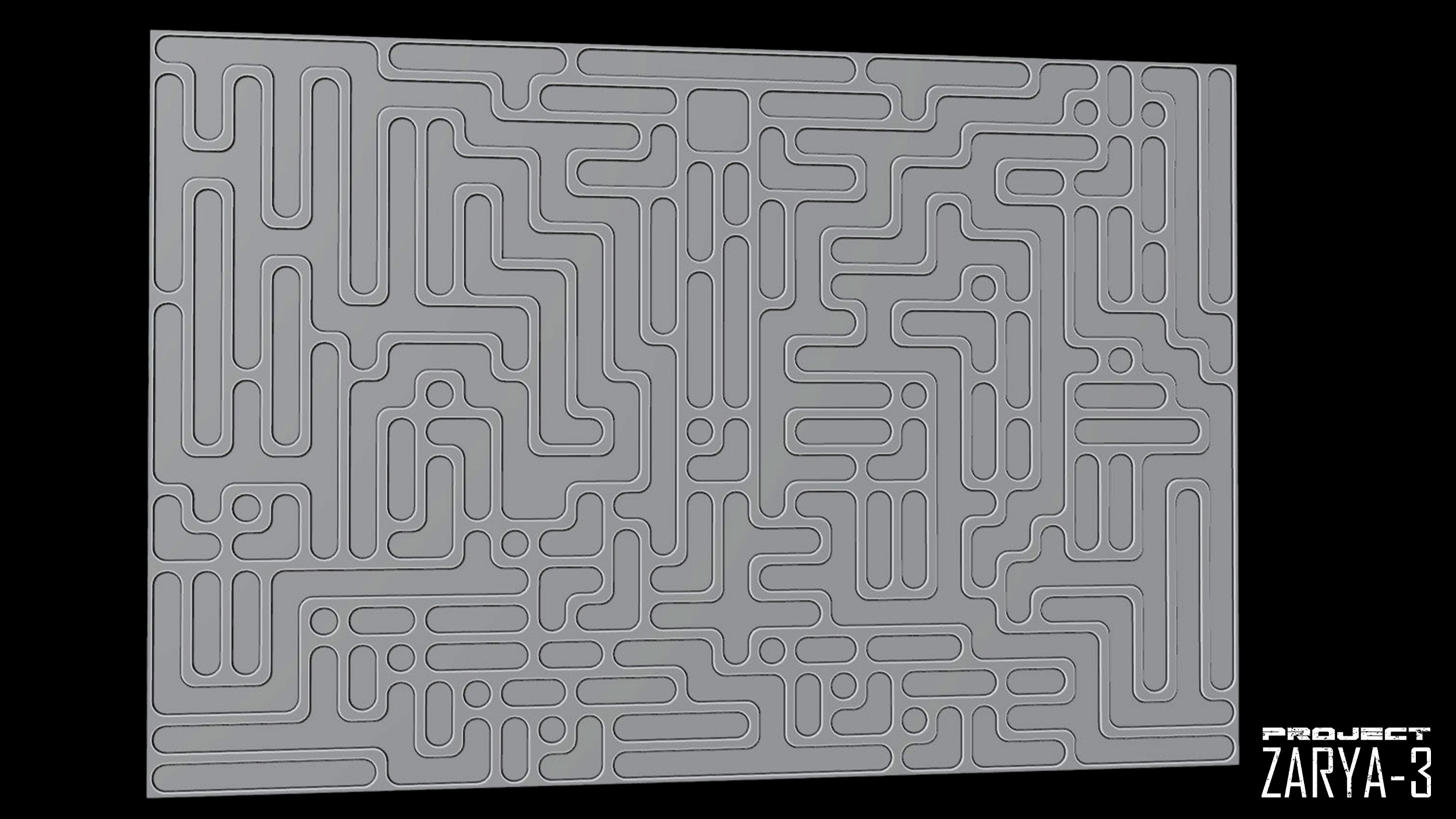
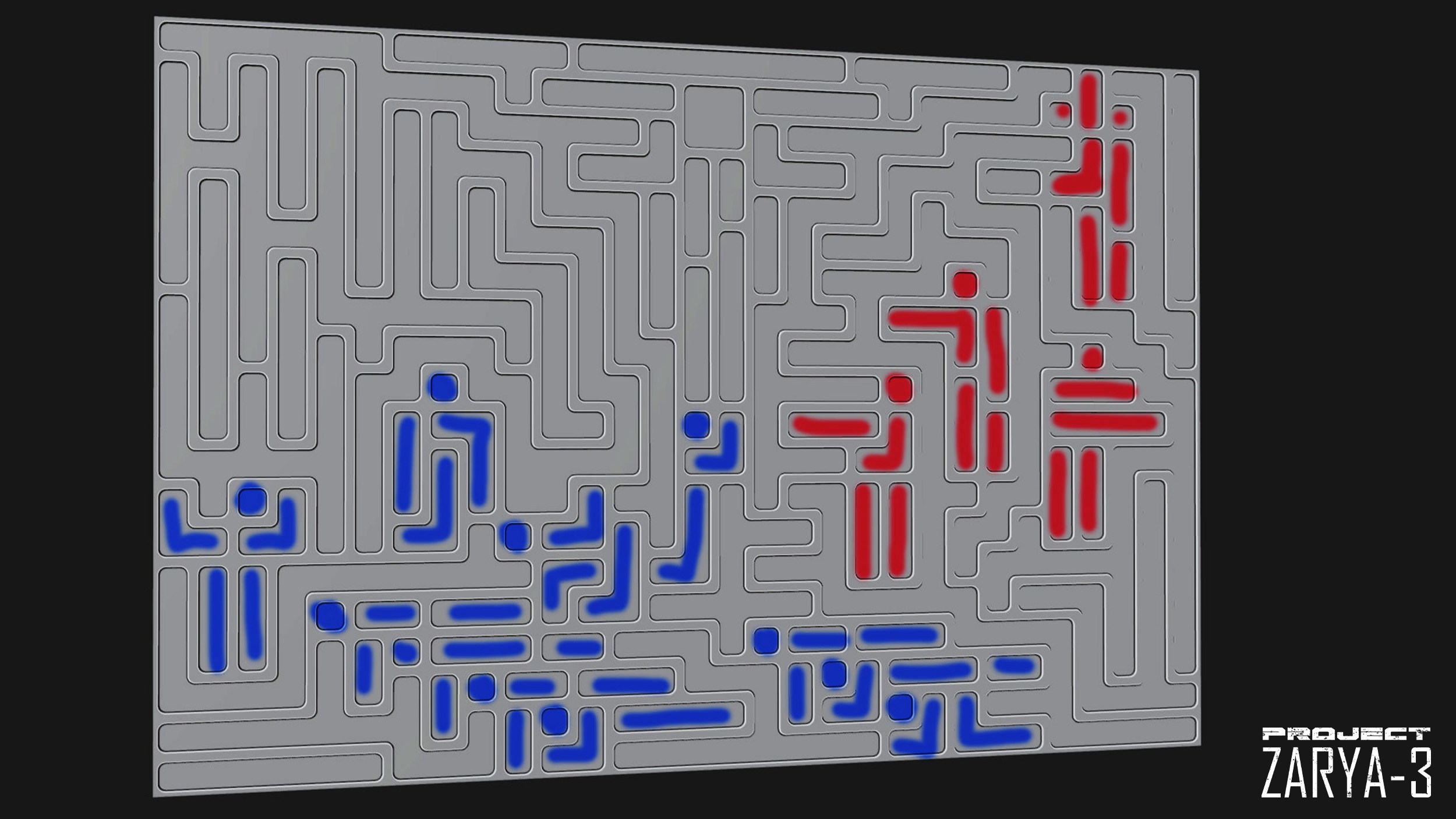
Speaking about the “Dark Museum” vibe – pretty early on I wanted to use a geometric pattern with rounded edges as a “connective tissue” to the greater Imperial style. Most of such patterns inside the prison complex are abstract and added for pure aesthetics only.
Not the wall mural on the Lobby though – I have woven it around a pretty straightforward story of three figures with weapons killing or subjugating other people while standing under a someone with a crown on their head.
This way even such “insignificant” detail that is destined to be merely “hanging” in the background reminds about the Imperial oppressive state.
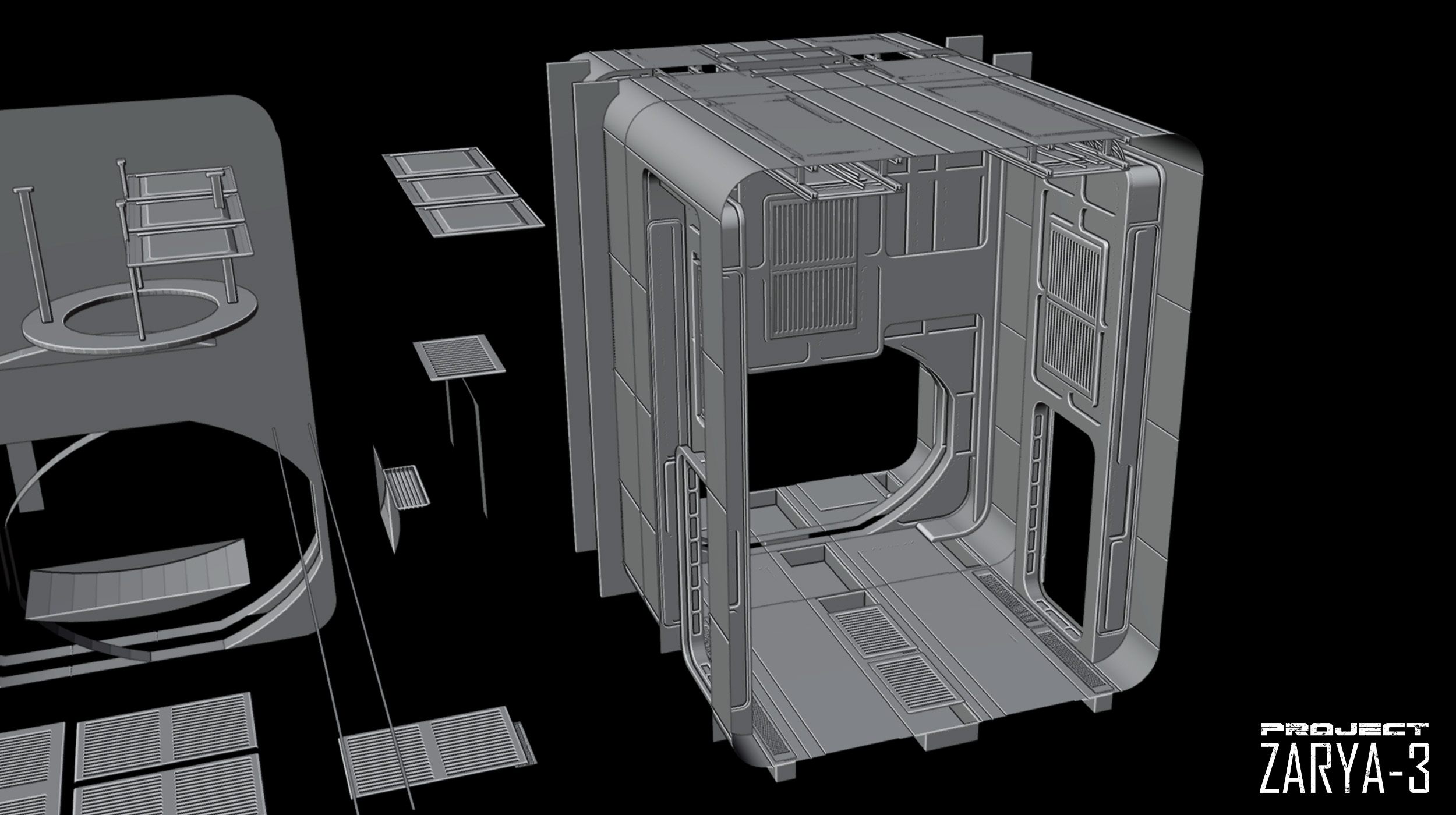
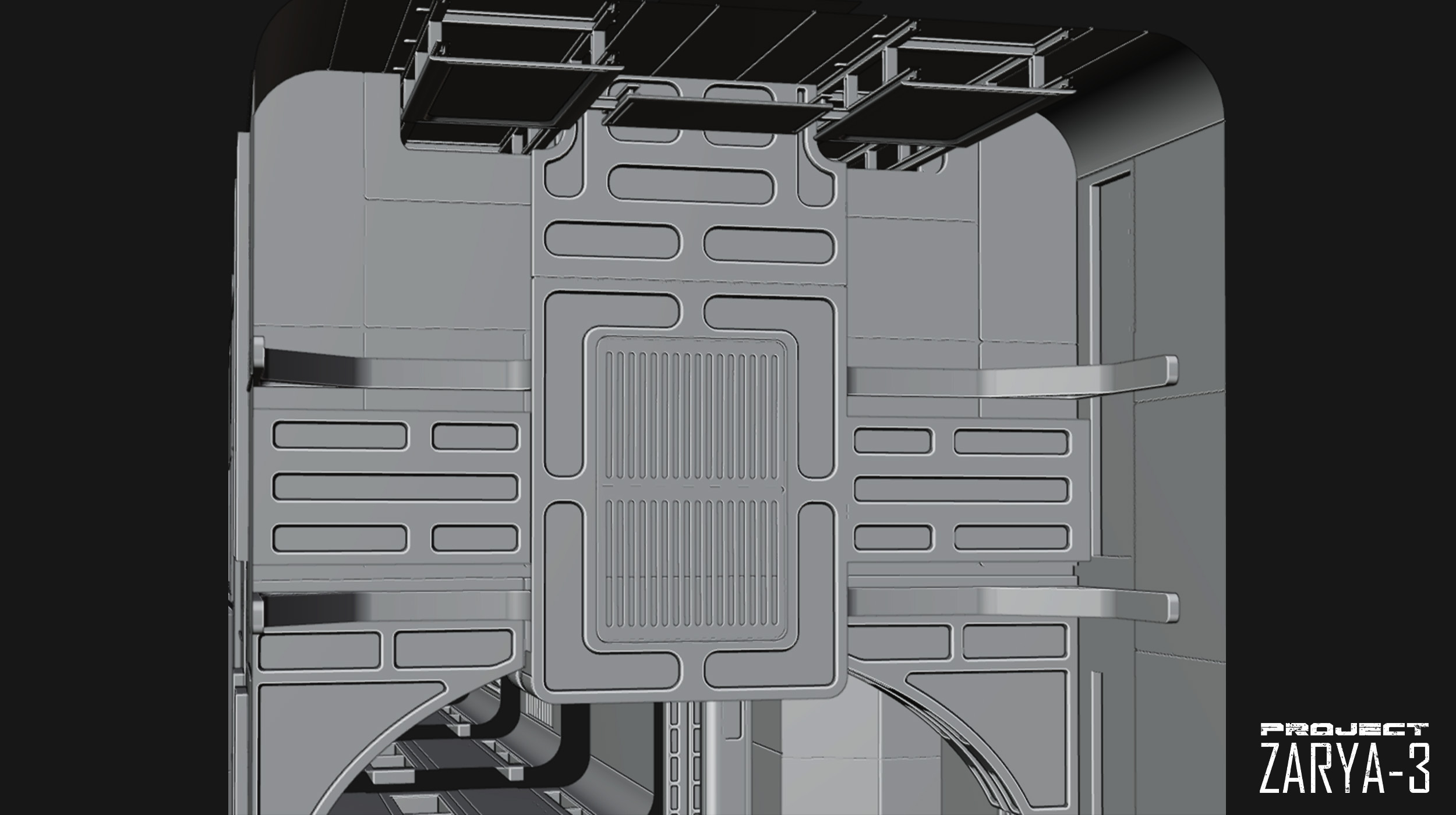
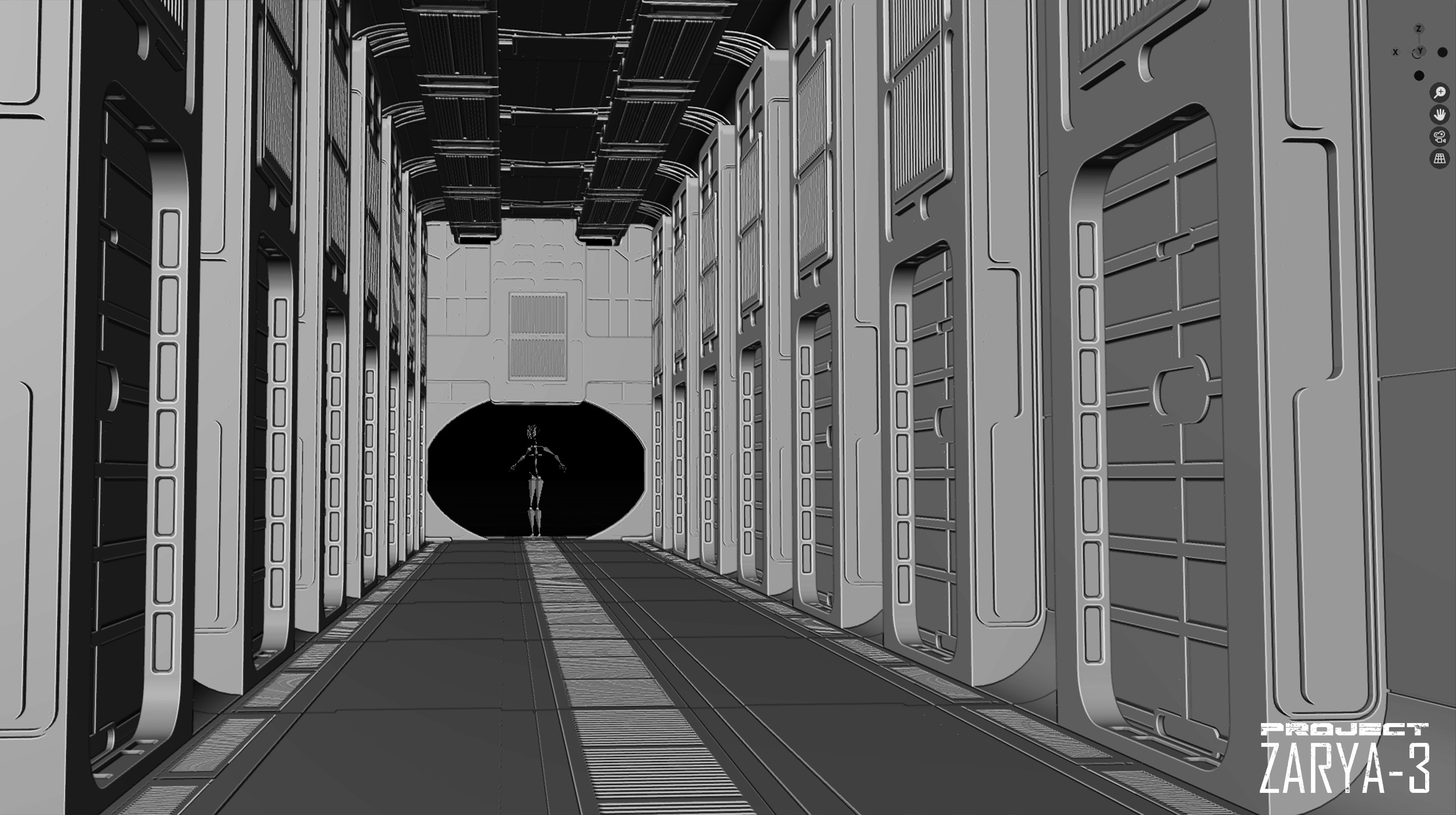
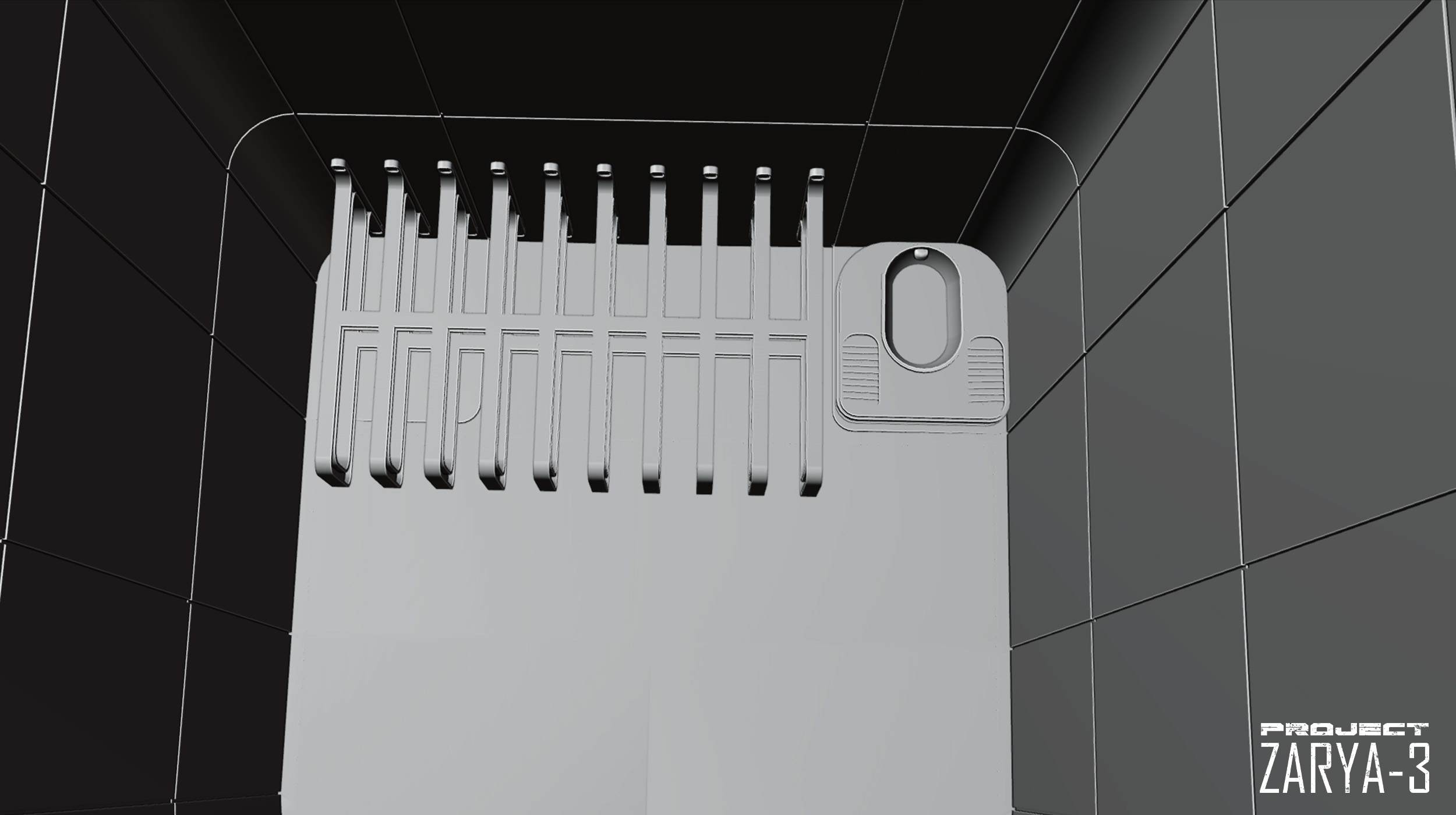
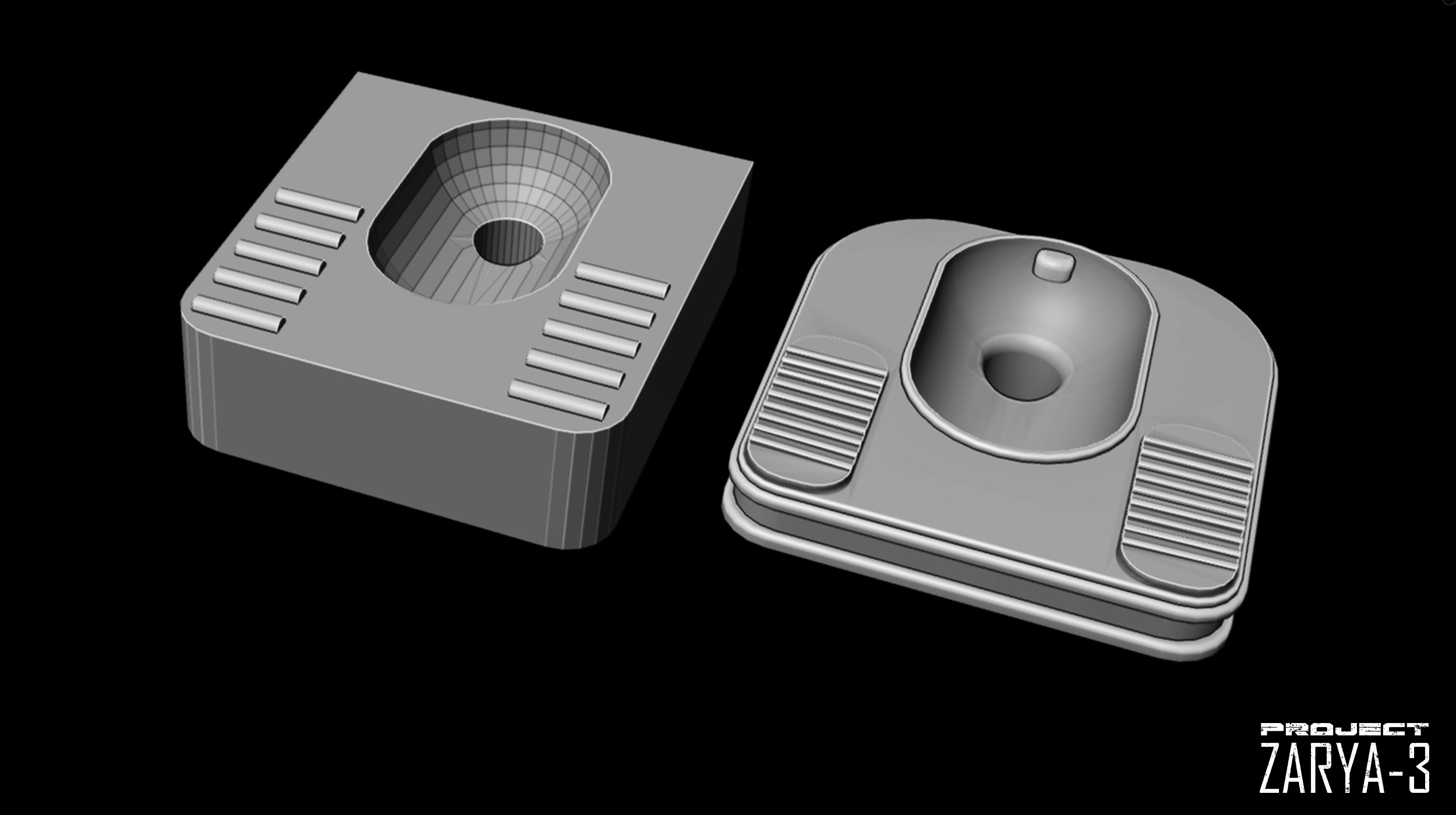
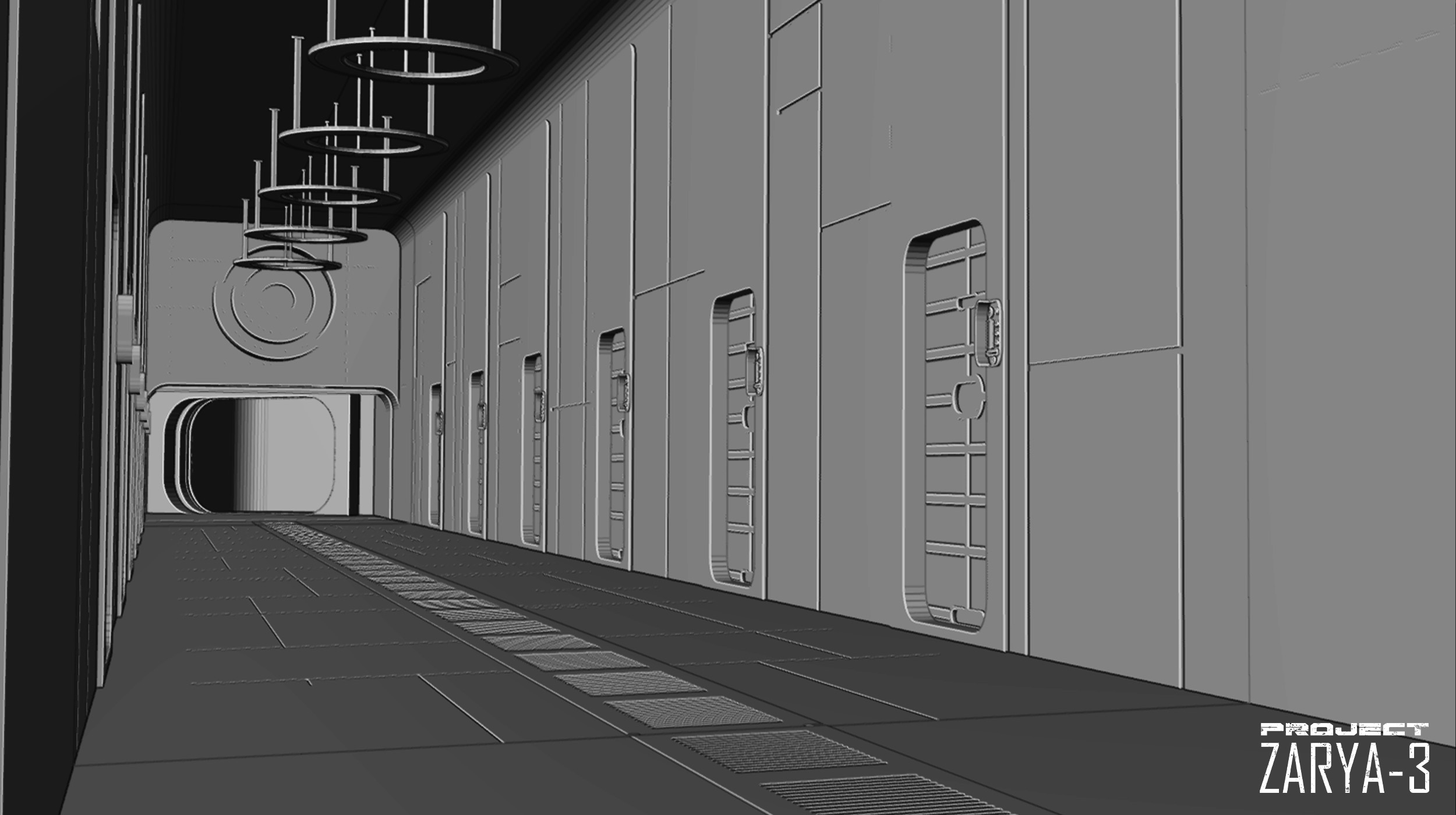
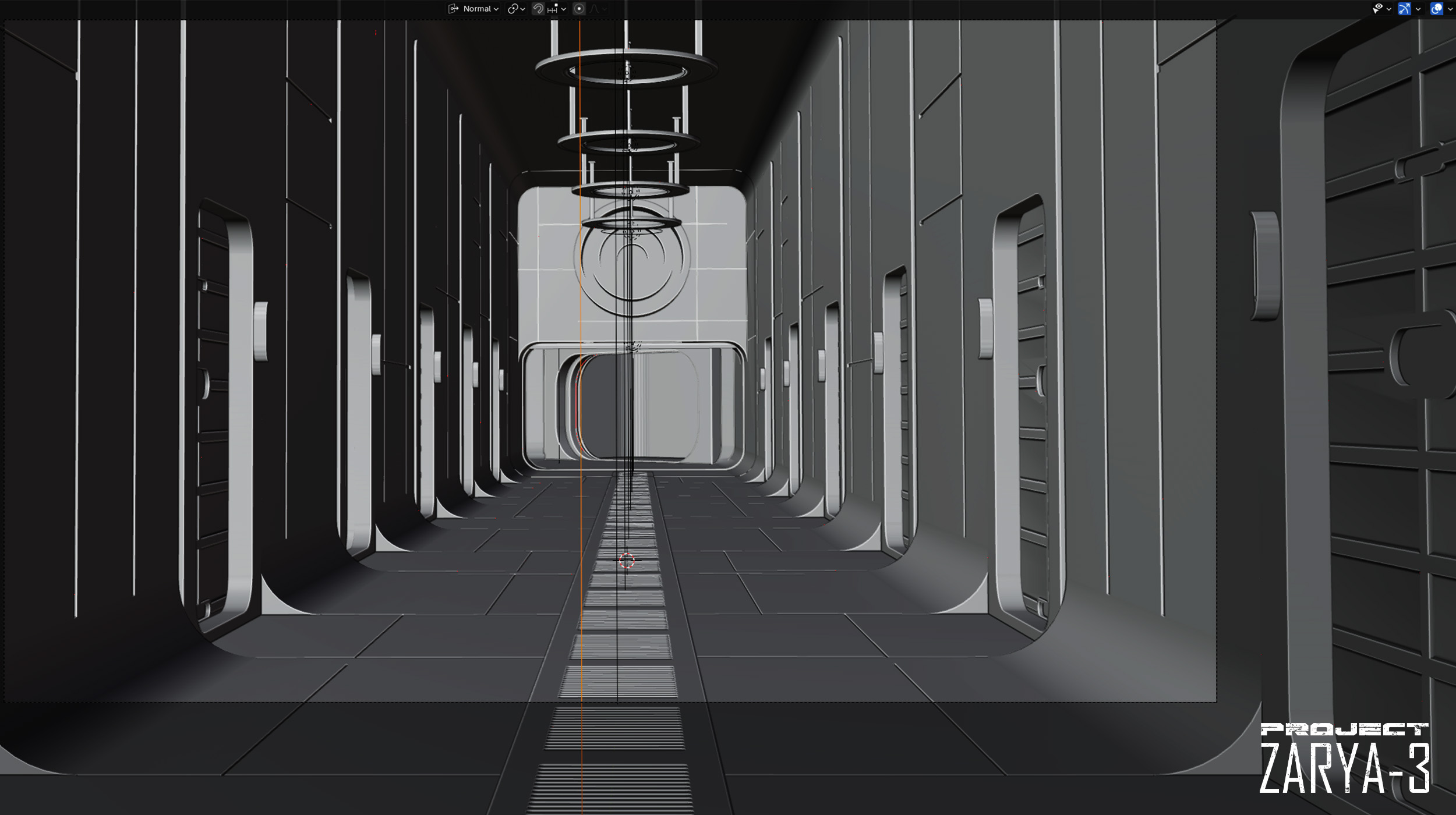
The second iteration of the Prison interior was startedd after my work on the Imperial Spaceship Construction Kit was complete. Because of that everything in the Prison was reworked to match the new quality standard.
One of the biggest changes became doors. Before, modern sliding doors were treated like they have always been an integral part of this 100 years old prison.
In the new version though, doors (and their metal frames) are visibly separated from the overall interior and act like high technological add-ons that are integrated inside a much older concrete structure of the Prison.
The first version of the Prison was made very early on in my 3D journey and started off as a collection of pretty plain corridors with “ordianry” doors and minimum of detail.
As my confidence with the software grew, the prison interior also grew with details – up until its first render! Unfortunately, while looking pretty neat on the wide shots, it felt like the lack of detail will be too obvious on any closeup shots, so the complete rework towards the Second Iteration was committed.