Imperial Heavy Transporter
This deliverable is crucial to complete the first graphic novel of the series. Since its multipurpose nature, variants of this ship are going to be used as set decoration of minor locations through the big part of the series.
The Big Fish With a Soft Belly
Imperial Heavy Transporter ships build the backbone of Imperial logistics. With over 400 meters in length, this is the largest ship in Imperial fleet that can perform a planetary landing and a subsequent take-off without any external support.
The latter is not advised though when the cargo pods of the Heavy Transporter are fully loaded with high density cargo like ore or liquids, because then his ship’s eight super-heavy bottom thrusters may not be able to provide a predictably soft landing on a planet with even slightly more then one Standard G.
Flexible internal cargo distribution system and detachable cargo pods make this ship pretty simple to load and unload to any capacity when operating in weightlessness. Because of that, Imperial Heavy Transporters are usually loaded and unloaded at orbital cargo hubs.
From there wares are being transported to the planetary surface either by local fleet of similar ships that operate under lesser time constraints, or by smaller couriers that deliver wares all around the planet instead.
Imperial Heavy Transporter can be (and usually is) operated by a minimal crew of three individuals (two pilots, one officer) and holds autonomous capacity to support a crew of eighteen for around six months of uninterrupted voyage.
The First Ship is Always The Hardest to Make
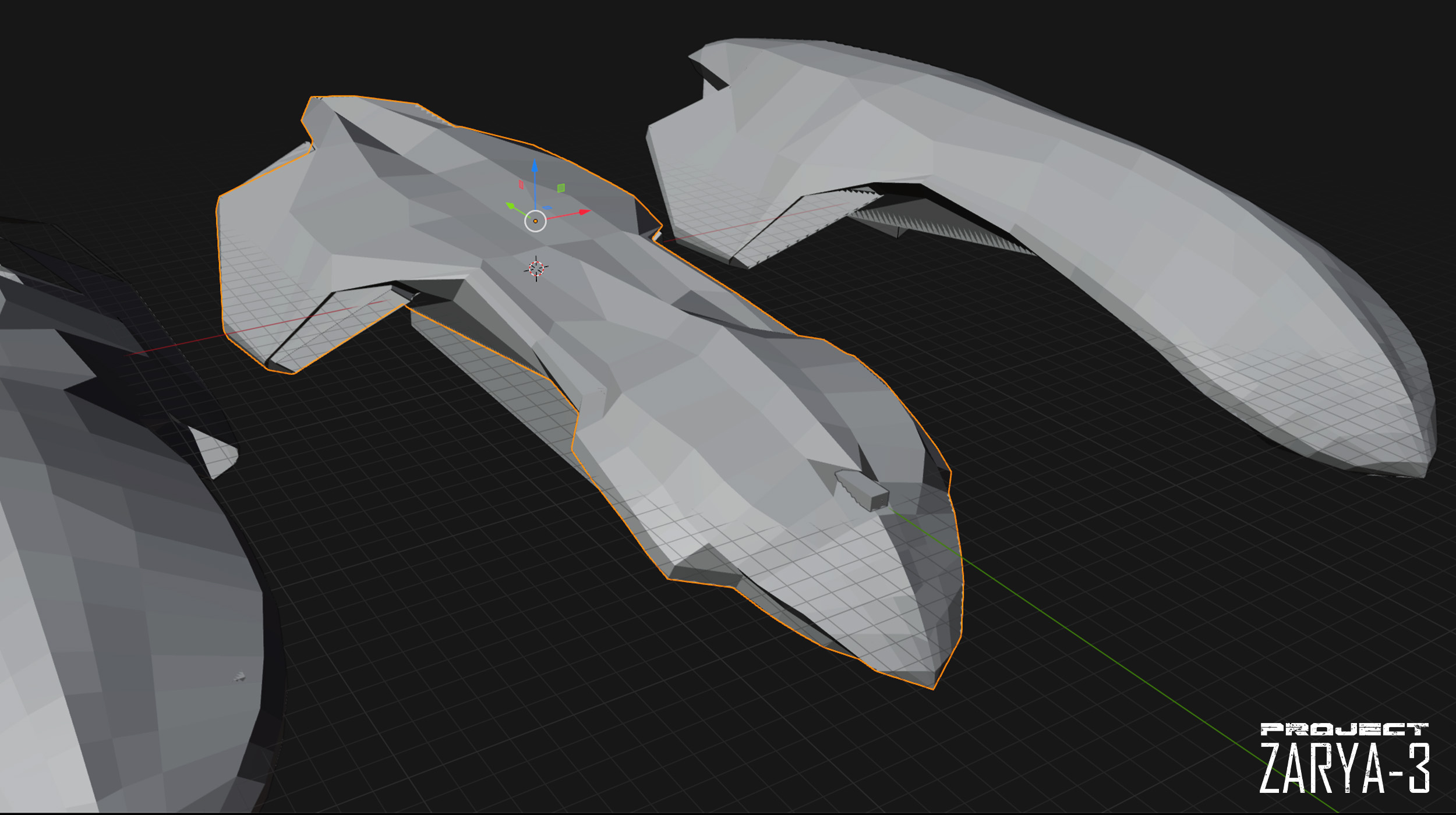
Initial design of the Imperial Heavy Transporter was a puzzle to crack – from tracing over a whale to reluctantly gazing at some designs from the Battlestar Galactica and promising myself NOT TO think about them while morphing the first shape of this ship.
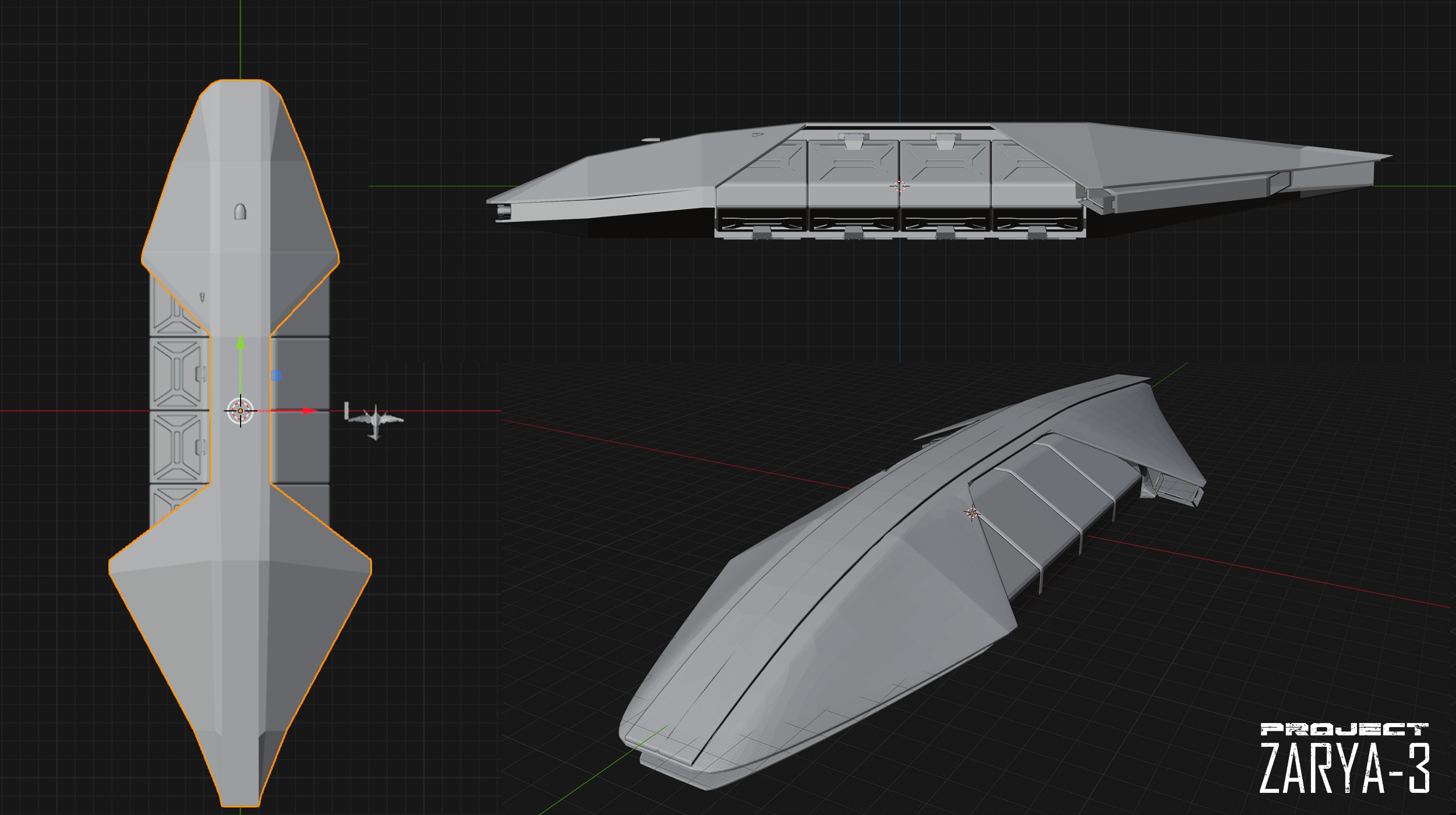
One of the core design guidelines that I have decided about early on was a realistic ratio between the volume of cargo and the volume of the vessel itself. After studying real life naval cargo ships I have noted pretty early on that following their cargo/hull ratio would not be “realistic” for a space vessel. Simply because real life cargo ships to not need to carry an ultra-heavy engines and protect their containers during the atmospheric re-entry.
So, the final design decision was to still attach the cargo on the outside of the hull, but protect the containers with sturdy shells of detachable cargo pods. Large frontal and dorsal sections though were meant to house ultra-powerful engines, large fuel tanks, machinery and living quarters for the crew while maintaining the now signature Imperial sleek aesthetic language.
After finalizing the final design of this heavy transporter though it hit me that it feels somewhat too streamlined and boring compared to its sister ship – the Imperial Light Attack Cruiser. Because of this unfortunate discovery, the external hull of this ship is scheduled for a full rework based on one of its older designs.
A Ship That Started First, But Seems To Be Finished Last
This ship is deeply in development and have been a test bed for assets that are shared with multiple other Imperial ships and structures. Unfortunately after a careful review its exterior is considered to be reworked in order to become more visually interesting and similar to other Imperial ships. Updates pending!
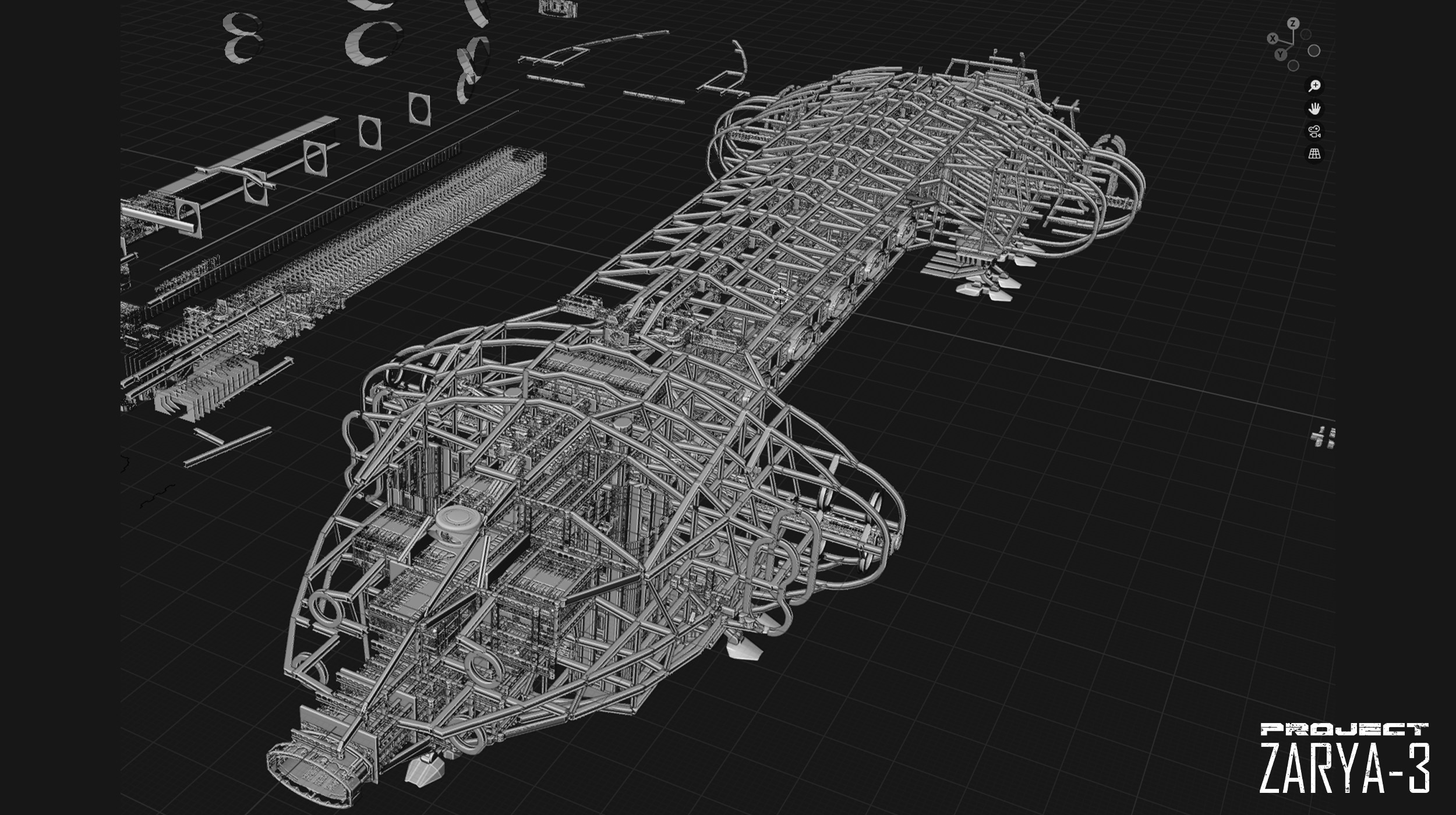
As the interior and exterior of the Imperial Heavy transporter were nearing their completion, one thing remained unsolved – internal superstructure. Truth is, this ship was always meant to be shown at a maximal close-up range at places where the cargo pods are connected to its hull. It means that detailed superstructure had to be put in place around that area.
Because of that just like with the interior pieces, the Heavy Transporter also became the test bed for the structural construction kit. These pieces are meant to build the inner structures of all upcoming Imperial ships and later be used for simulated destruction and creation of some stationary constructions.
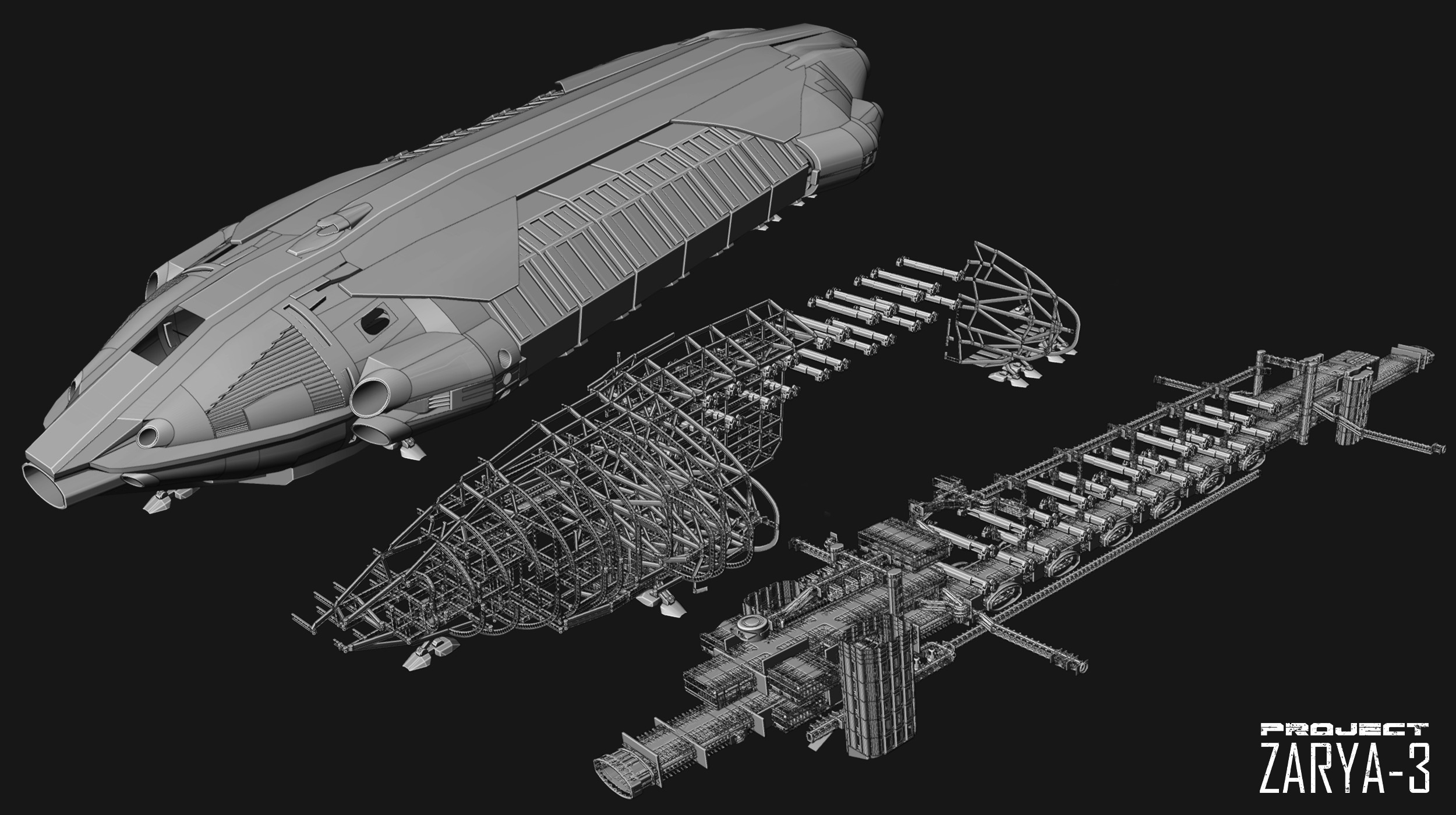
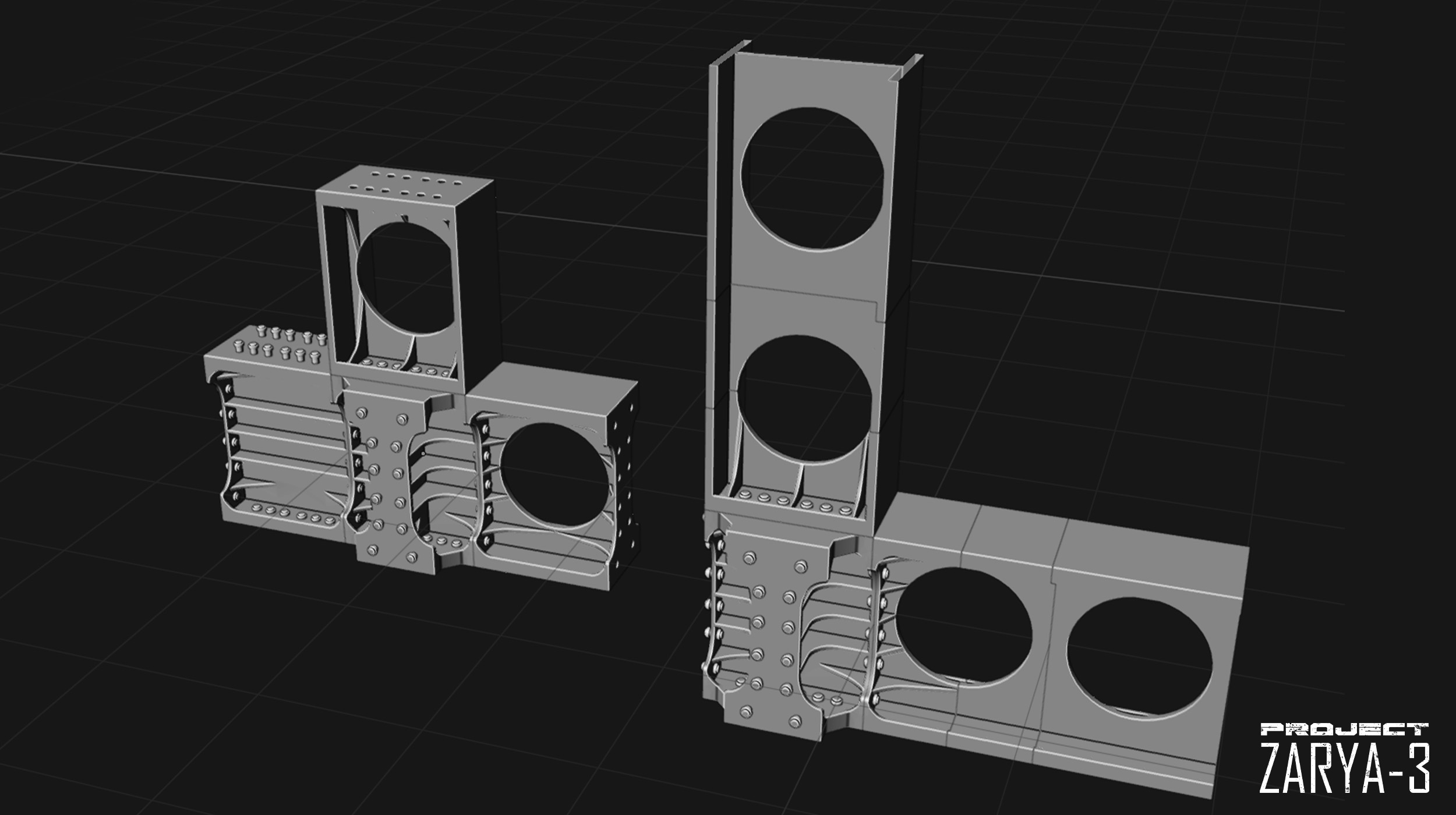
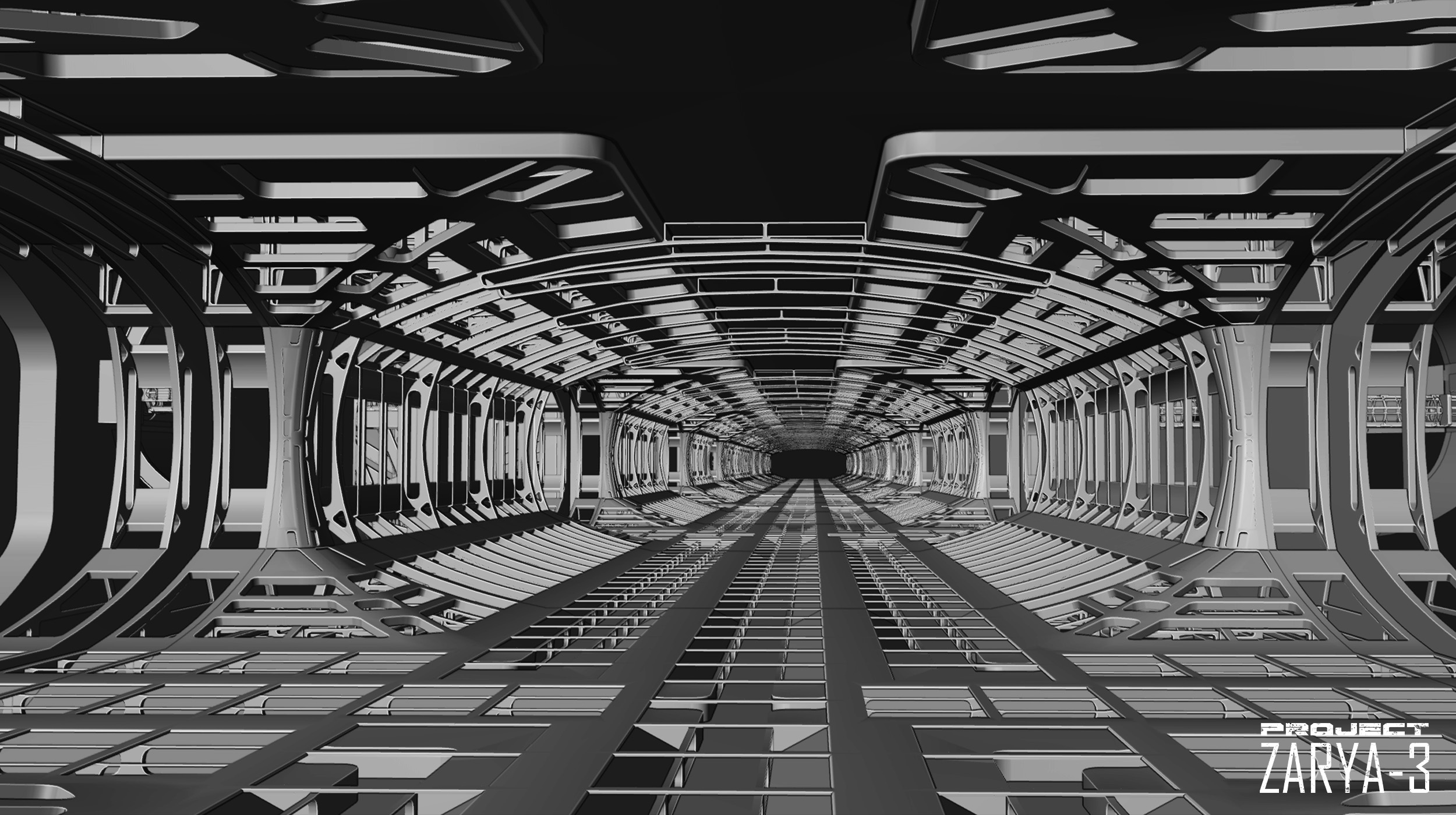
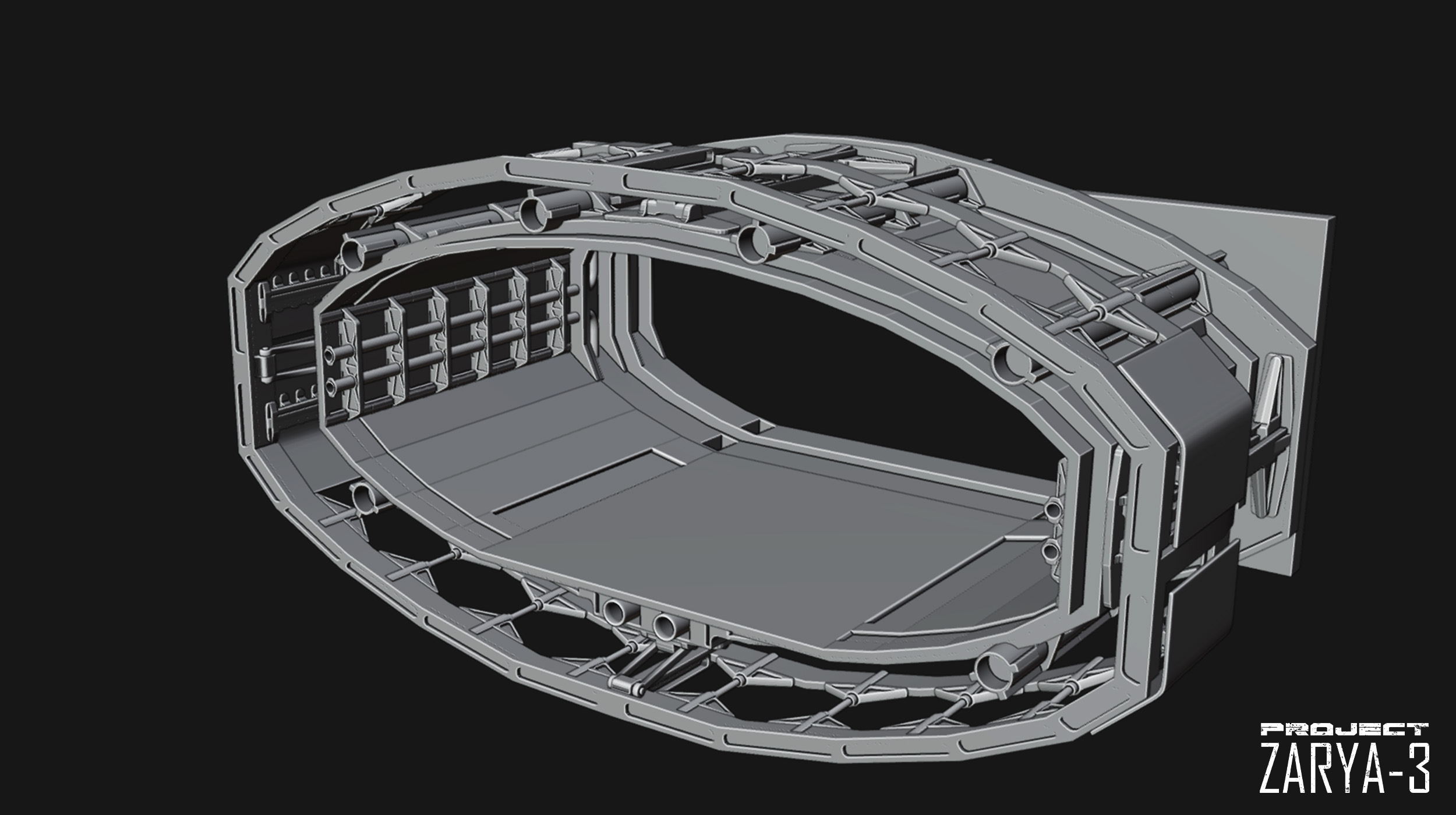
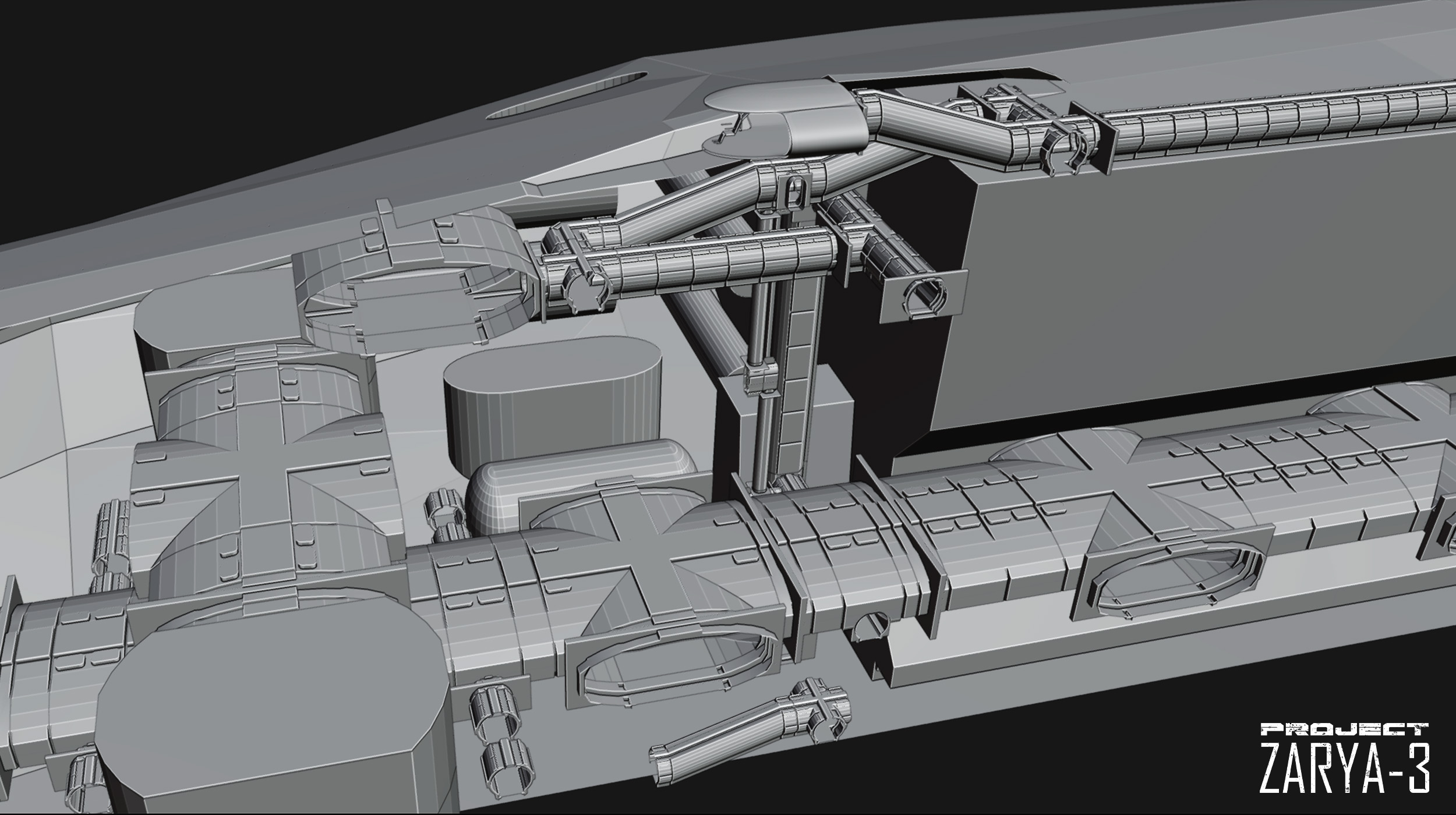
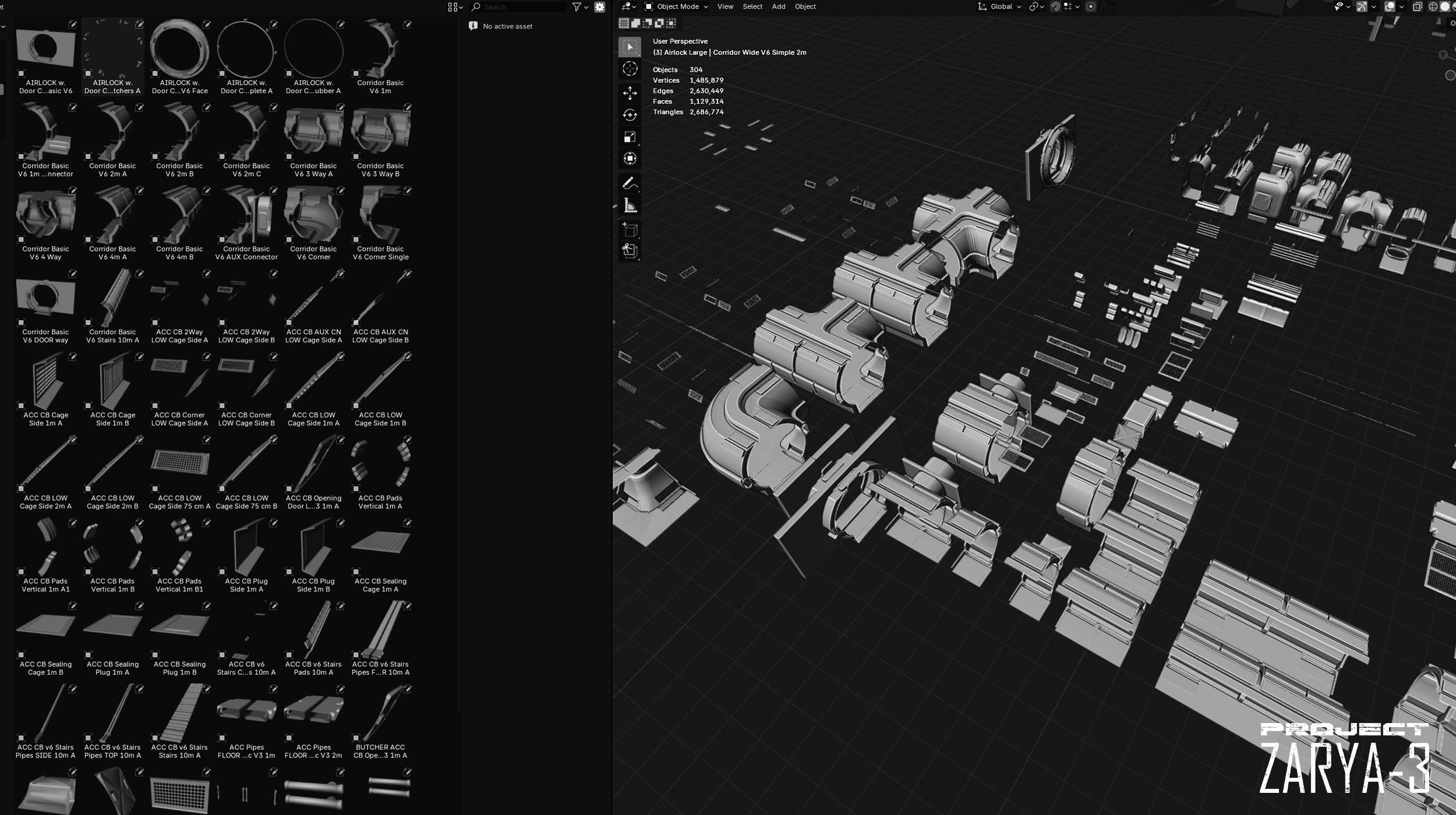
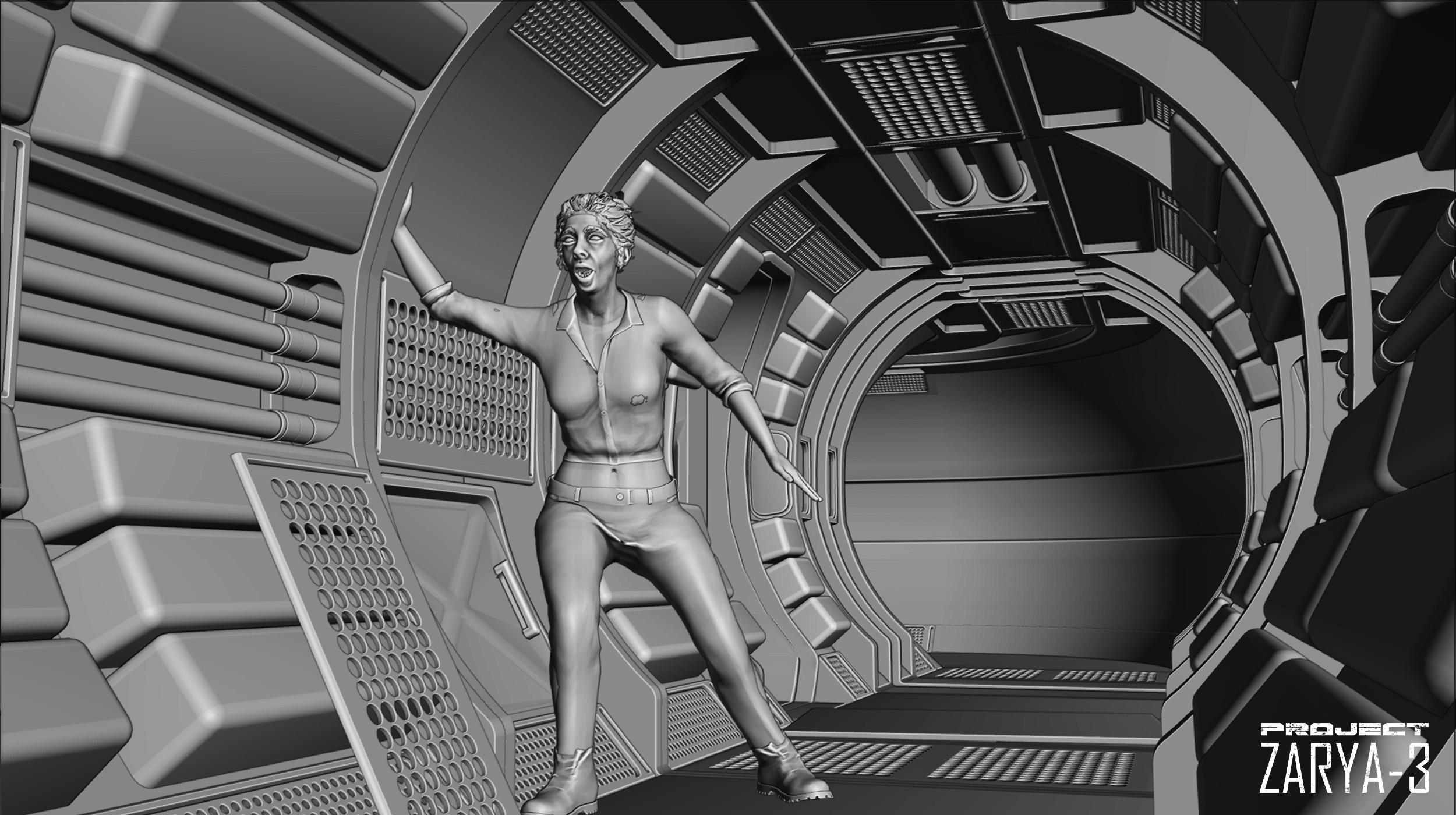
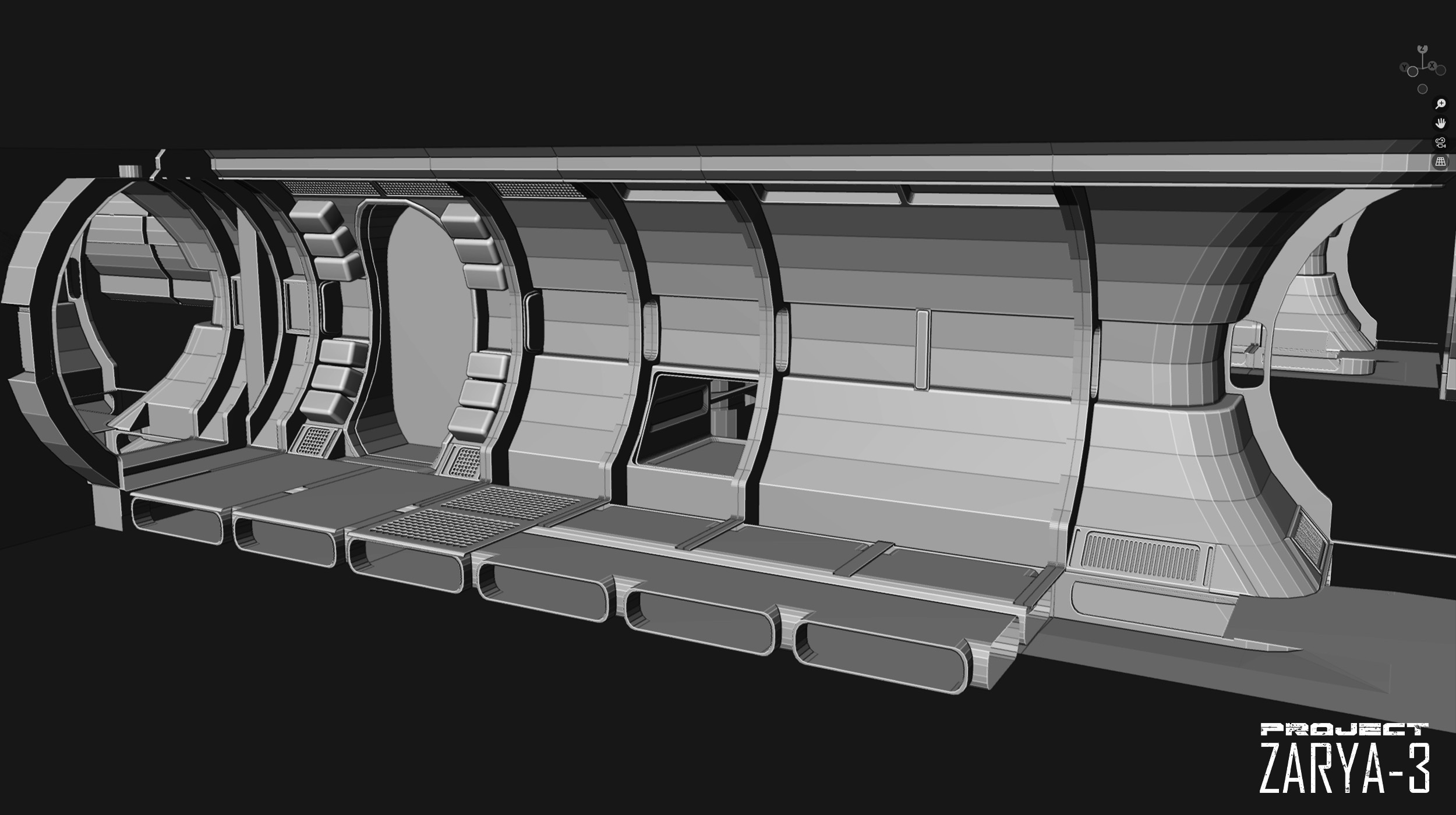
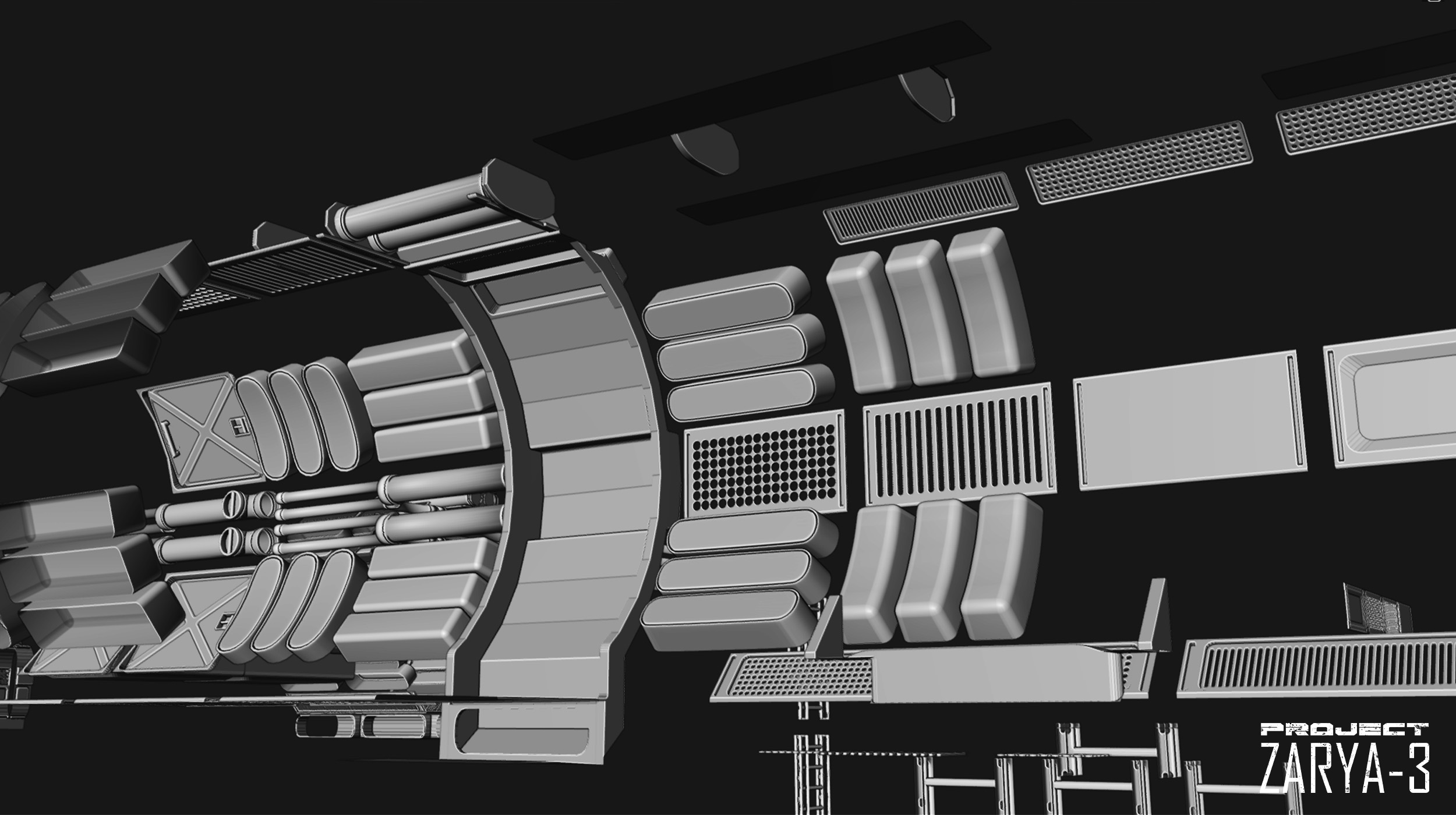
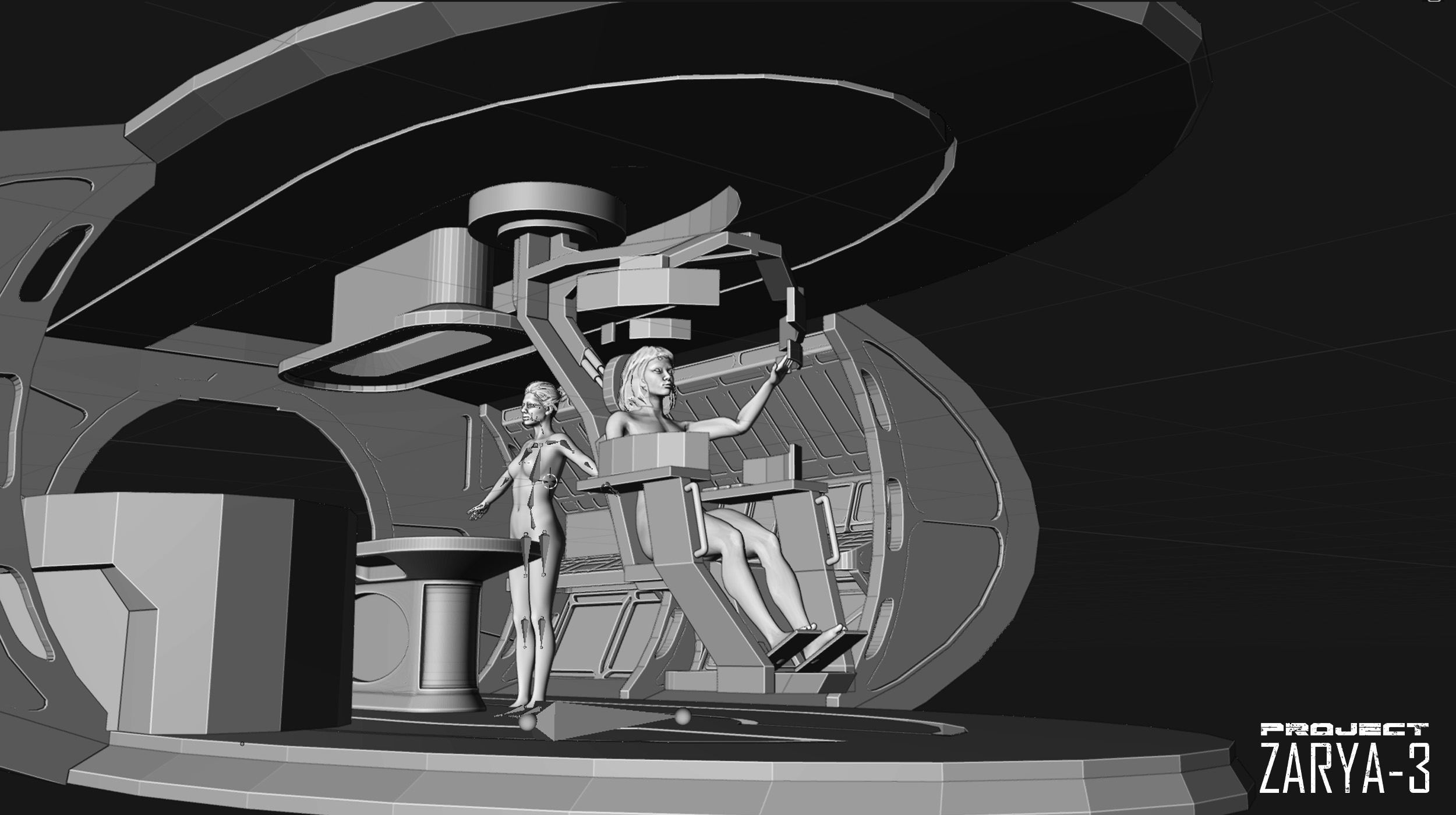
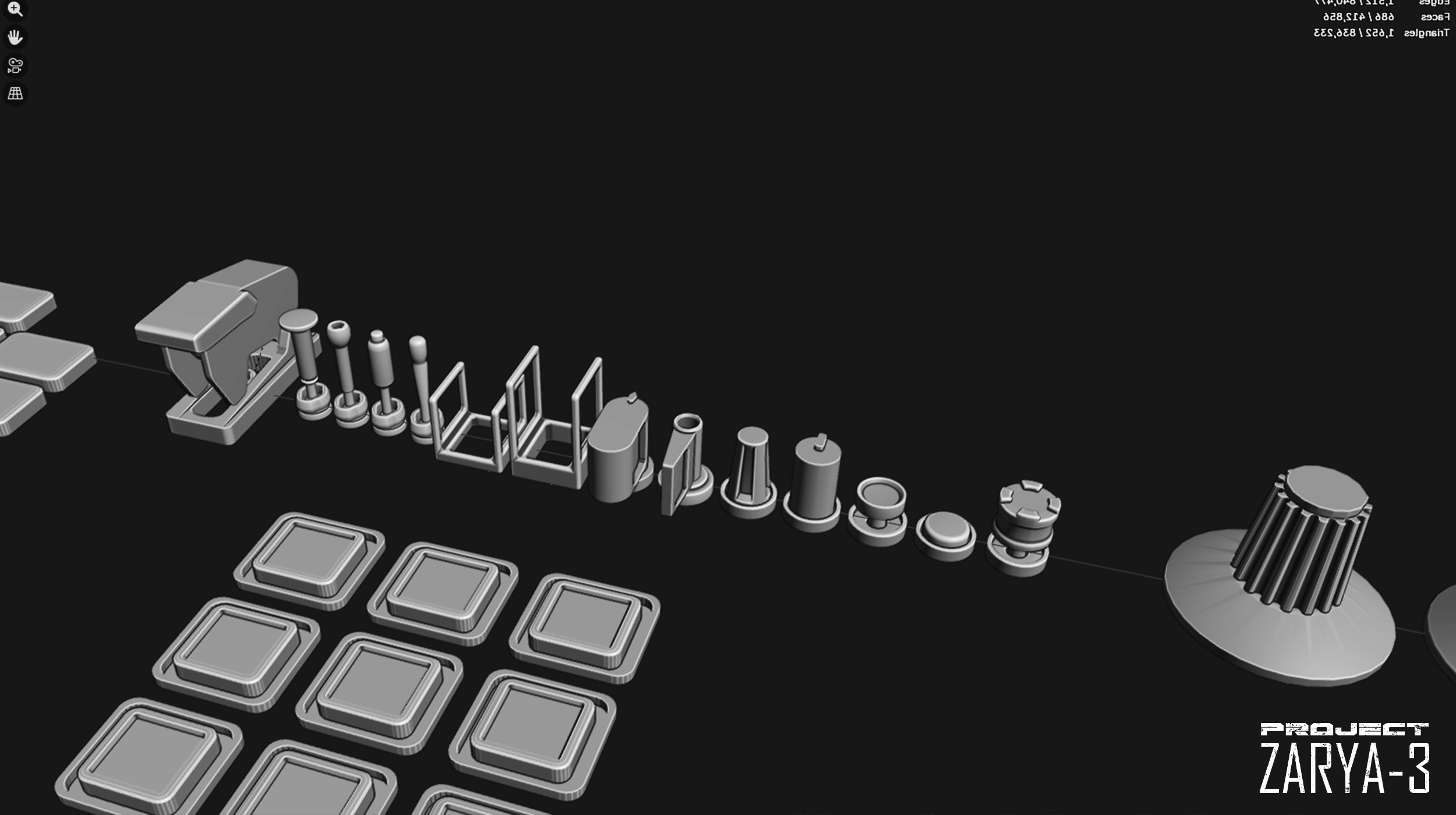
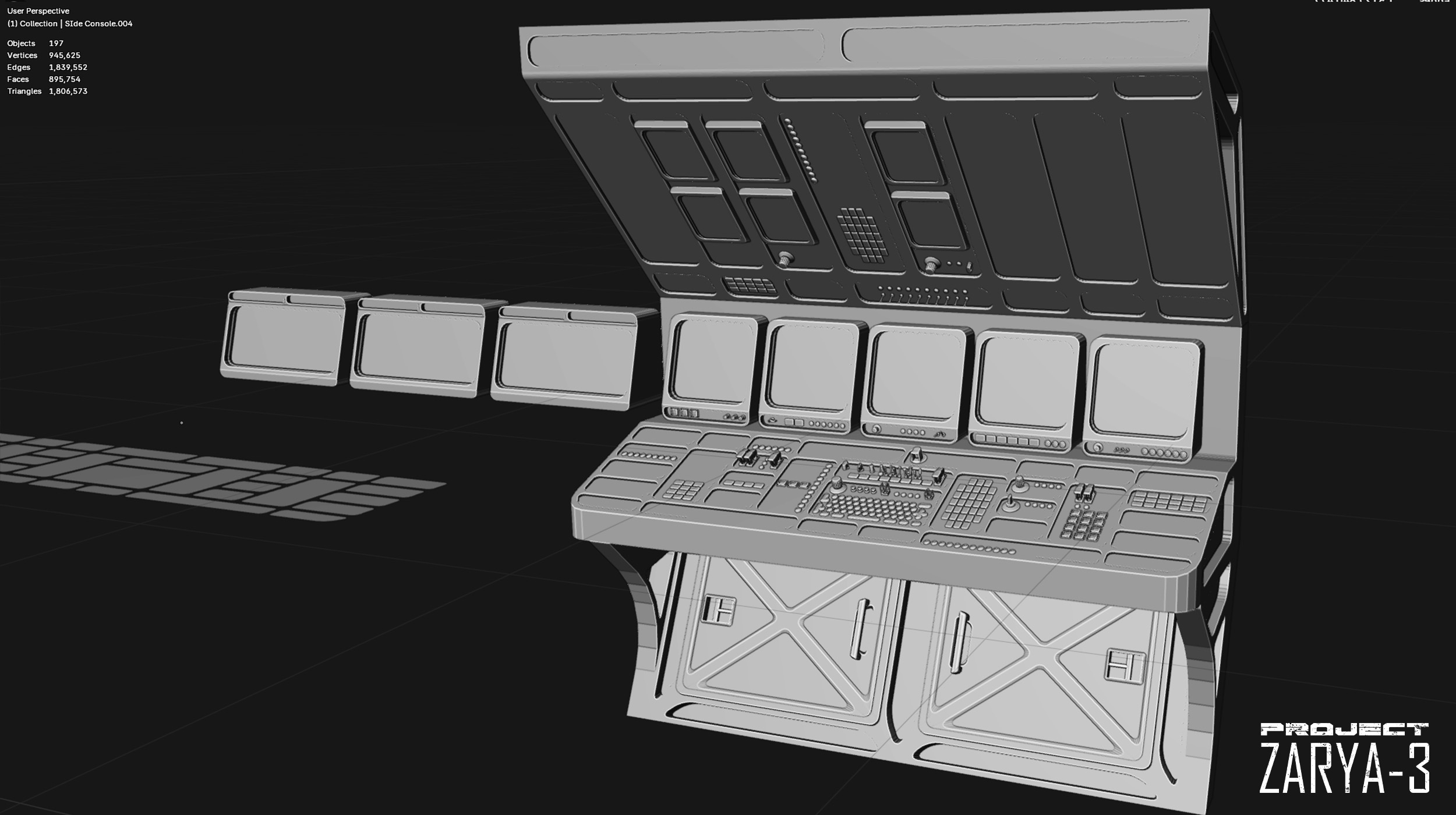
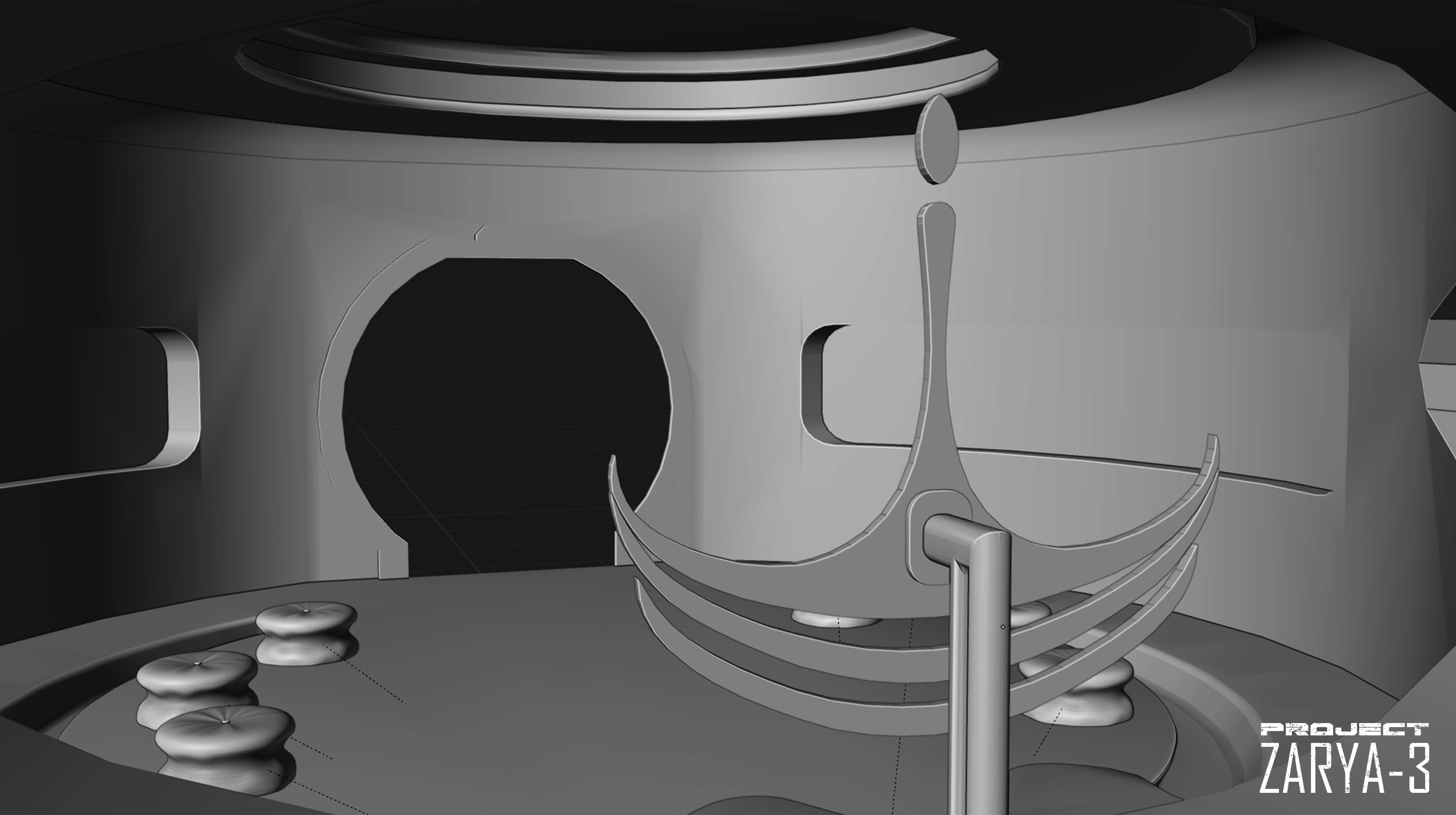
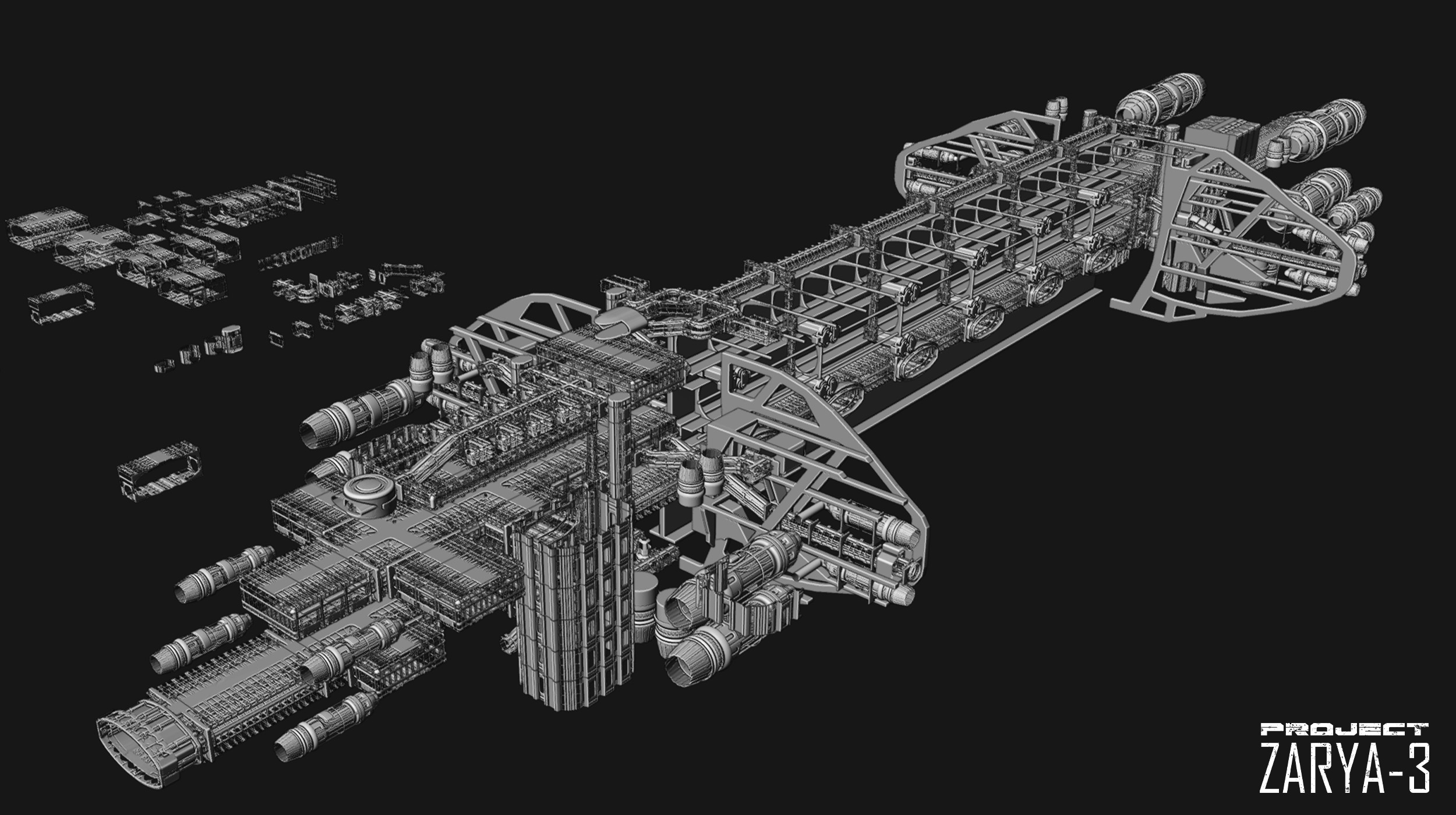
Providing all ships with realistic interiors became a crucial part of ZARYA-3 pretty early on in its production. As the first large ship in the series, the Heavy Transporter also became a test bed for the developing Imperial Corridor Kit and multiple other universal parts that shape the aesthetics across the Imperial fleet.
Aside from four inter-compatible sets of corridors and decorative parts for them, multiple unique rooms and elevators were designed to complete the interior of this ship.
One very important part of this ship is the praying room – a place where members of the crew can spend some time in solitude while listening to the running water and gazing at the cosmic ocean through a wide window behind an Oceanist altar.
To be real, the Imperial Heavy Transporter together with the Red Starfighter were the my first attempts at creating a spaceship in 3D. Both of these vessels have endured through multiple iterations before I could land on the final shape that I want to pursue.
Regarding this ship in particular, the first challenge was to nail the aquatic design of its hull while retaining as much of the cargo space as possible. The final solution became a sturgeon-inspired design where a long cargo corridor connects frontal and dorsal cargo airlocks with internal cargo bays and detachable cargo pods on the sides of the ship.
This way the cargo on the Imperial Heavy Transporter could be loaded/unloaded either by moving it in through its internal corridors, or by simply by attaching/detaching external cargo pods.