
Imperial Landfall Armor
This deliverable is extremely important as its design language and parts are going to become the foundation for the looks of the whole Imperial military.
The Ultimate Space Invader Gear
Even though the period of ruthless interstellar colonization is over, the Empire still strives to maintain its capability to rapidly subdue less technologically advanced populations. It means that Imperial Shipmen have to be both extremely comfortable in their Landfall Armor, but also be fully protected from overwhelming barrage of pallets/arrows. Realities of space combat and unpredictability of missions in hostile environments do also require some EVA capability and at least basic CBRN protection.
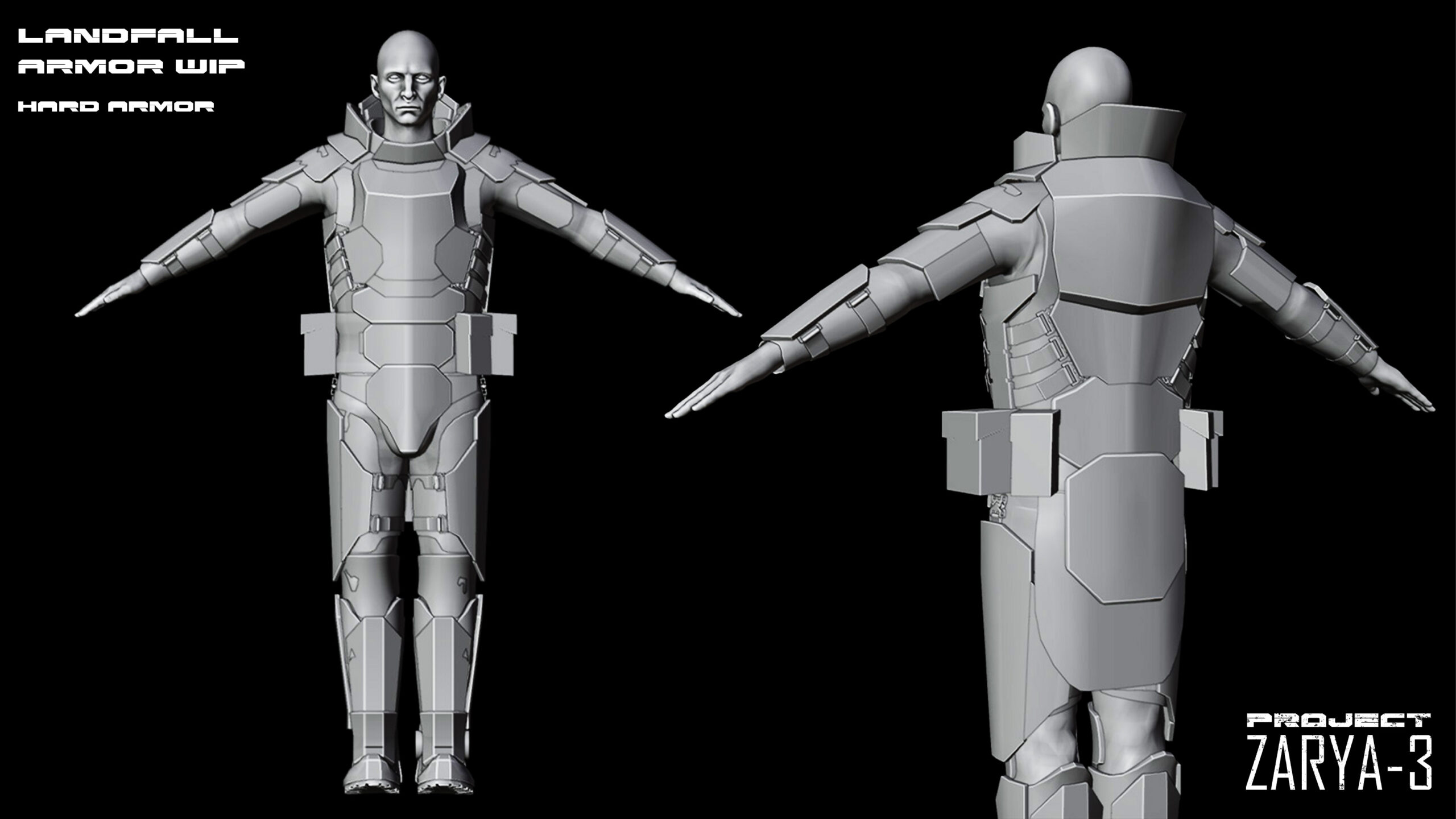
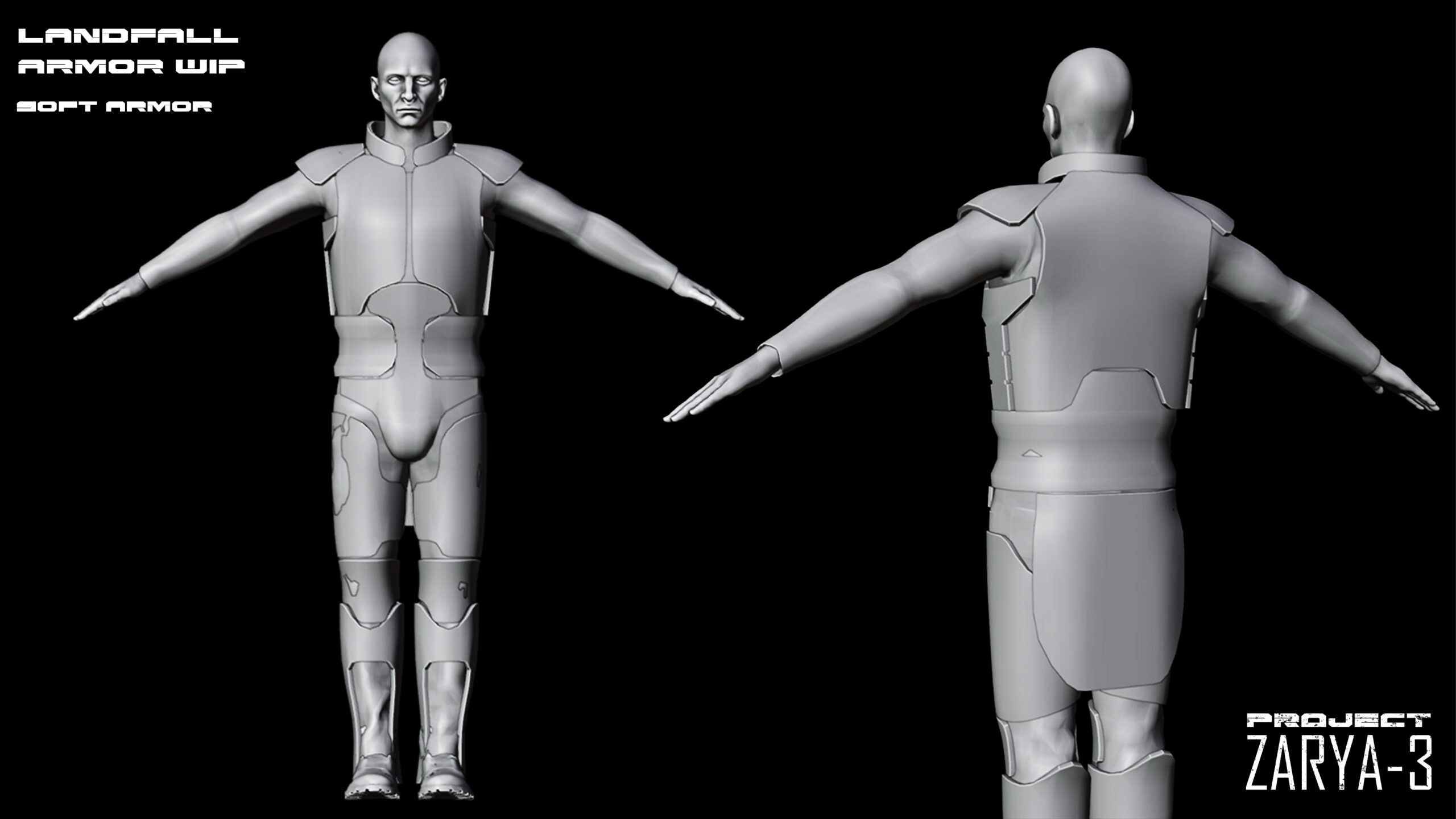
As a result of all these requirements, the Landfall Armor features layers of hard- and soft armor that cover most of soldier’s body. The thickness of hard Armor ranges from 2 to 20 millimeters and is meant to be heavy and bulletproof only in areas of highest risk while providing simple slow moving projectile protection around the rest of the body.
Soft armor is neither homogeneous – some parts of it, like inlays on the sides and shoulders feature armored scales on the inside, while the chest- and back pieces are fully elastic to maintain the light weight while serving its purpose of a secondary protection layer and a shock absorbent.
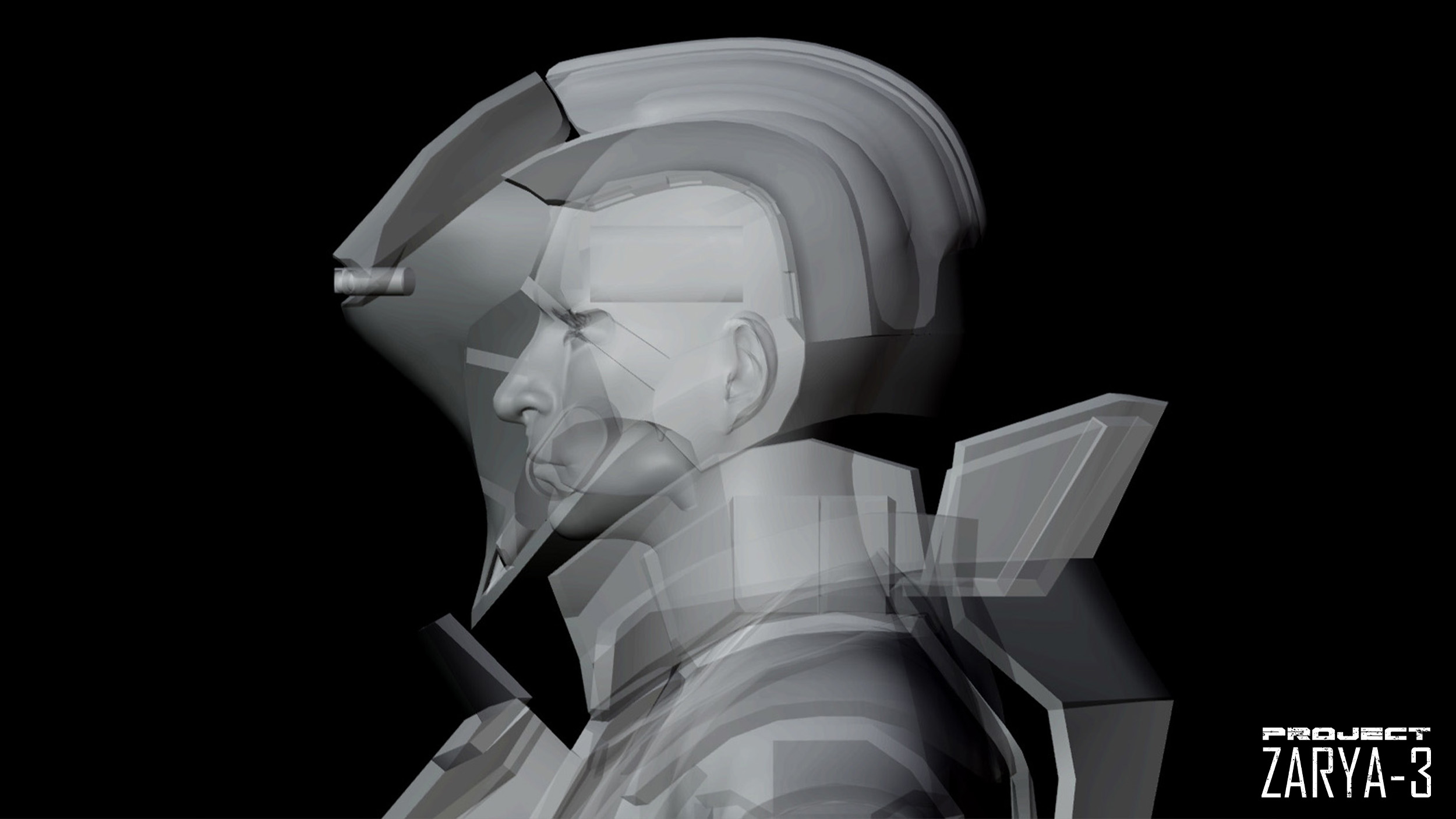
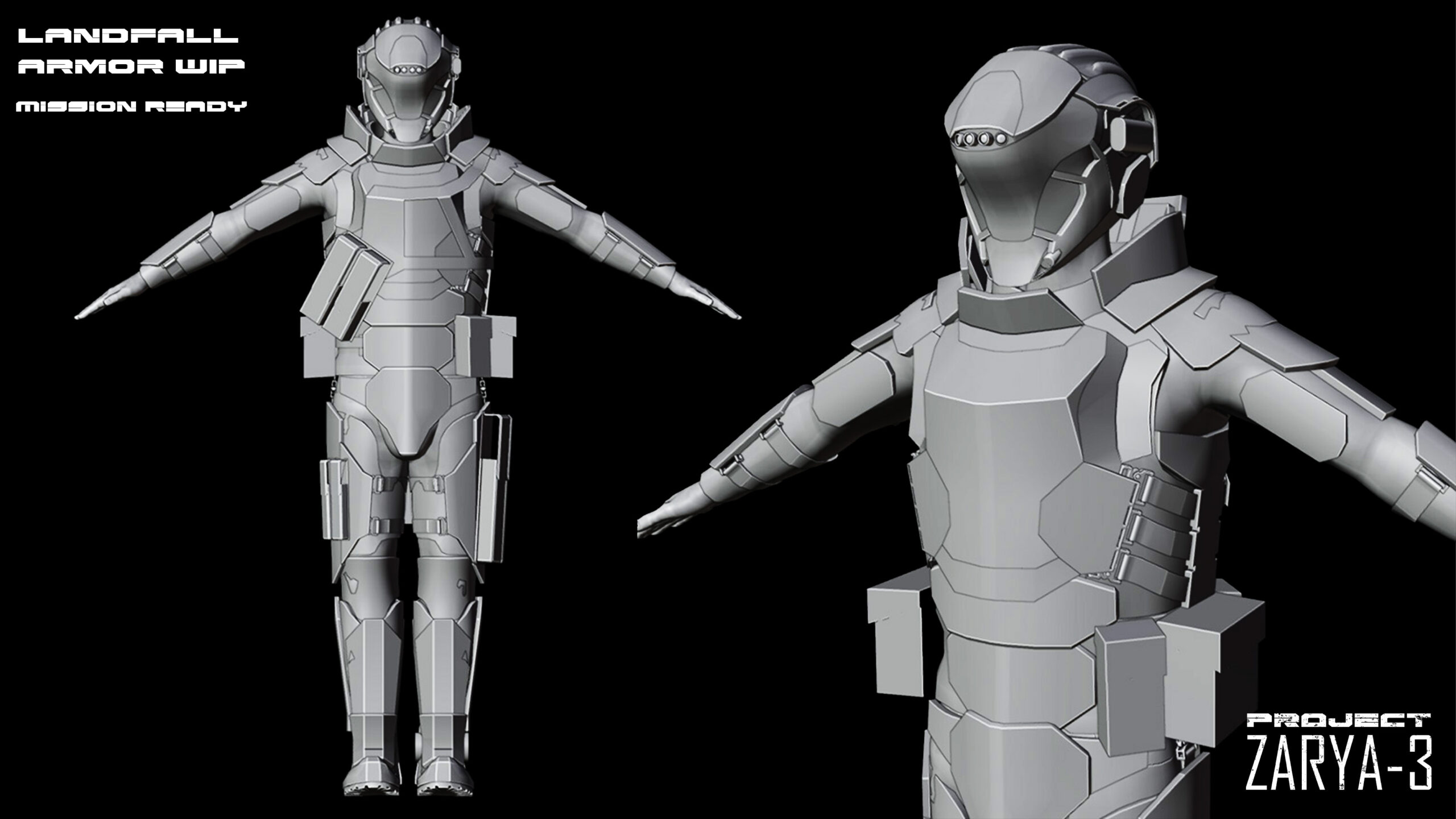
The helmet of the armor deserves a special mention itself because this sophisticated piece of Imperial engineering features full 5-axis protection to the wearer’s head while providing them with a 180 degrees field of view and built-in low light capabilities. This helmet is also connected with suit’s internal resource system that allows the user to survive for longer periods of time while being fully insulated from the outside environment.
In order to spread the load of the armor over the body and prevent neck injuries, the inner back side of the armor features a lightweight and agile skeletal frame that rests on wearer’s waist and shoulders while providing an attachment point for the helmet. Because of this frame, the user of Landfall Armor becomes fully safe from injuries during high impacts to the helmet (so long the helmet itself can hold the hit of course). Spine injuries from falls and collisions also become less likely thanks to this skeletal frame too.
Feet and legs of the user are also protected from low-power landmines and are partially bulletproof to avoid incapacitating injuries. Together with the overall weight of the armor, leg protection provides a significant strain on user’s knees. This shortcoming is unavoidable and requires Imperial soldiers to maintain exceptional physical fitness not to be crushed by their own armor.
Fortunately, all vital functions are stored solely in the front- and back section of the Landfall Armor, which means that all other armored parts can be safely removed to reduce the weight of the whole kit for more agile operations in low-risk environments.
The "Soviet Space Knight"
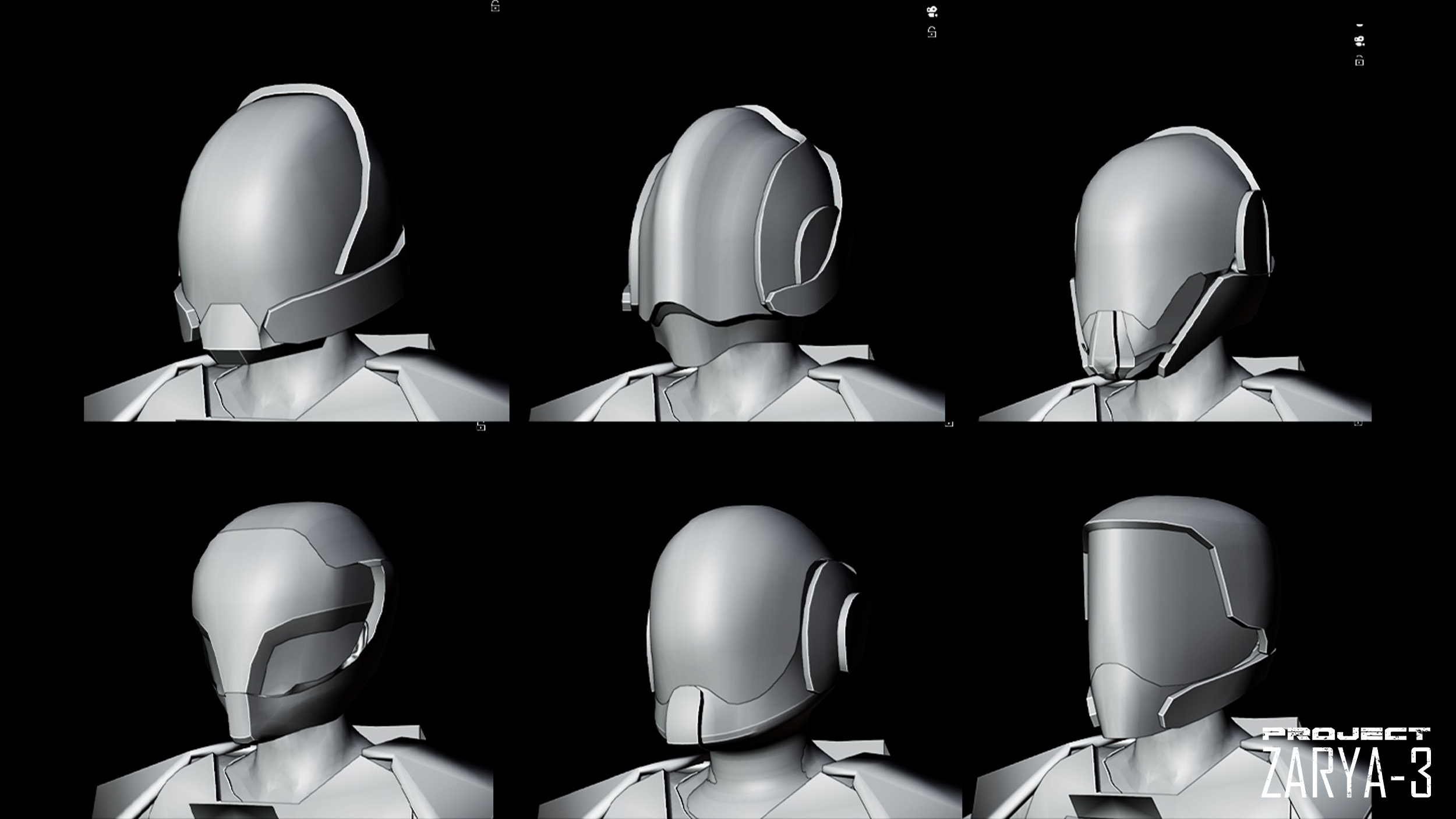
The development of Landfall Armor began with the shape exploration for the helmet. It was meant to look sleek and rounded on par with the designs of Imperial spaceships and architecture. Still, because of the aesthetic constrains of ZARYA-3, its design could not look “too advanced” and had to feel like it was made in Soviet Union.
The latter turned out to be a challenge, because the most compelling design of the face shield was just screaming “European Knight” and had to be balance out by some crudeness and appropriate shape language on the back side of the helmet.
Fortunately, the space behind the frontal armor panel of the helmet became a perfect feet for padding that resembles Soviet tank helmet and protective railings around side accessories further made the back silhouette of this helmet look like something a Soviet tank driver would wear while maintaining the elegant frontal view.
I was a bit worried that this helmet would look way too similar to the police helmet from Deus Ex: Mankind Divided or some obscure Spartan design from HALO franchise, but a fast research into the matter did pleasantly surprise me with the originality of my material.
The array of four night vision googles at the top of the helmet are inspired by now pretty dated American “Future Soldier” headset from Microsoft. Obviously, I went for a much more simple and integrated version though, similar to Andruil’s EagleEye headwear, but much more compact.
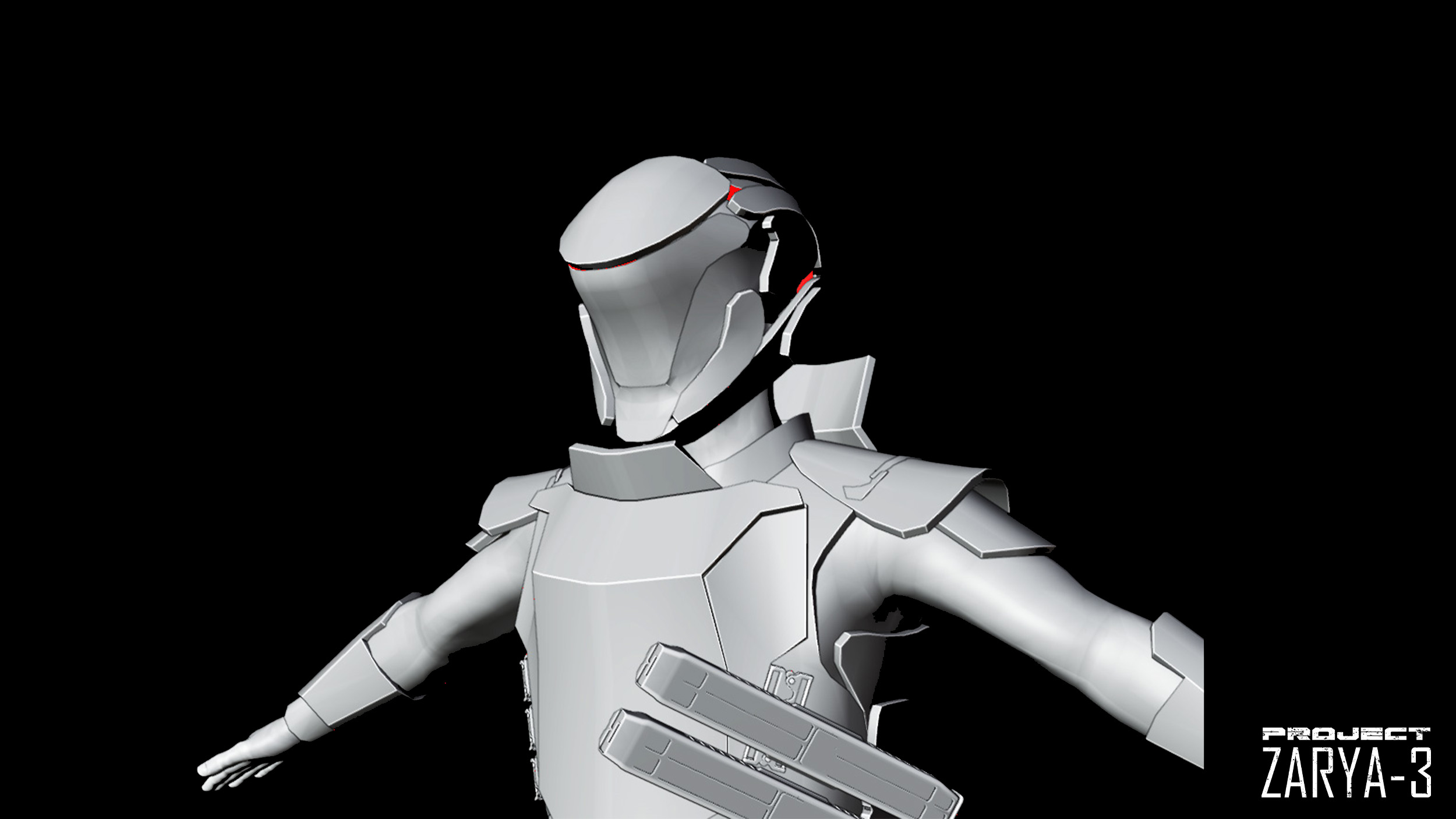
Regarding the look of the armor, I also went pursuing originality and lore-consistent functionality while keeping some Soviet military references near my sight. As near-final design I landed on a full-metal outer armor with curved surfaces and sharp creases that is very in-line with other Imperial designs.
Accessories though were conceived fully inspired by Soviet military gear from 70s and 80s: Armored scales inside the soft armor that works similarly to 6B2 ballistic west. The outer inventory harness does also follow similar inspiration source as it is not modular, but is type-produced to accommodate legions of similarly-equipped soldiers for as small price as possible.
A Piece of Gear That Dictates Aesthetics of a Nation
This armor is under development, more updates are coming soon!
Current final version of the armor features thick front- and back armor plates that act both as ballistic protection and house the necessary onboard water- and oxygen supply.
The hard armor can be stripped down to the singular core section that together with the helmet provides fully autonomous life support and tactical awareness for its user. In order to maintain realistic ergonomics, unlike many of its fictional counterparts, the chest armor has two padded ears to support the butt stock of a rifle.
Soft armor on the other hand can be worn separately as a slow-moving projectile resistant protective suit. The inventory harness on the other hand is fully integrated into the outer armor, except for its waist section that is attached to the ballistic belt.
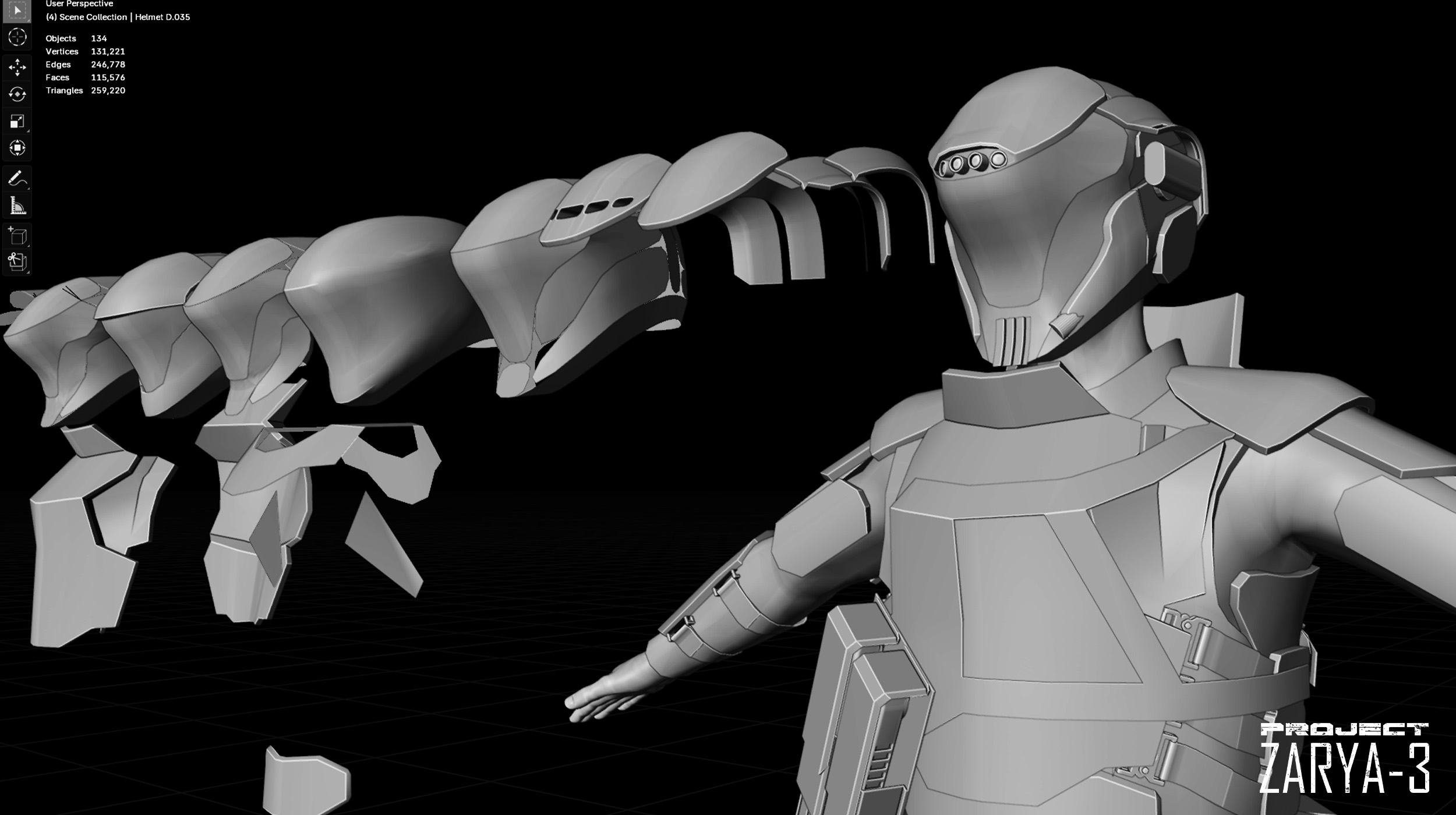
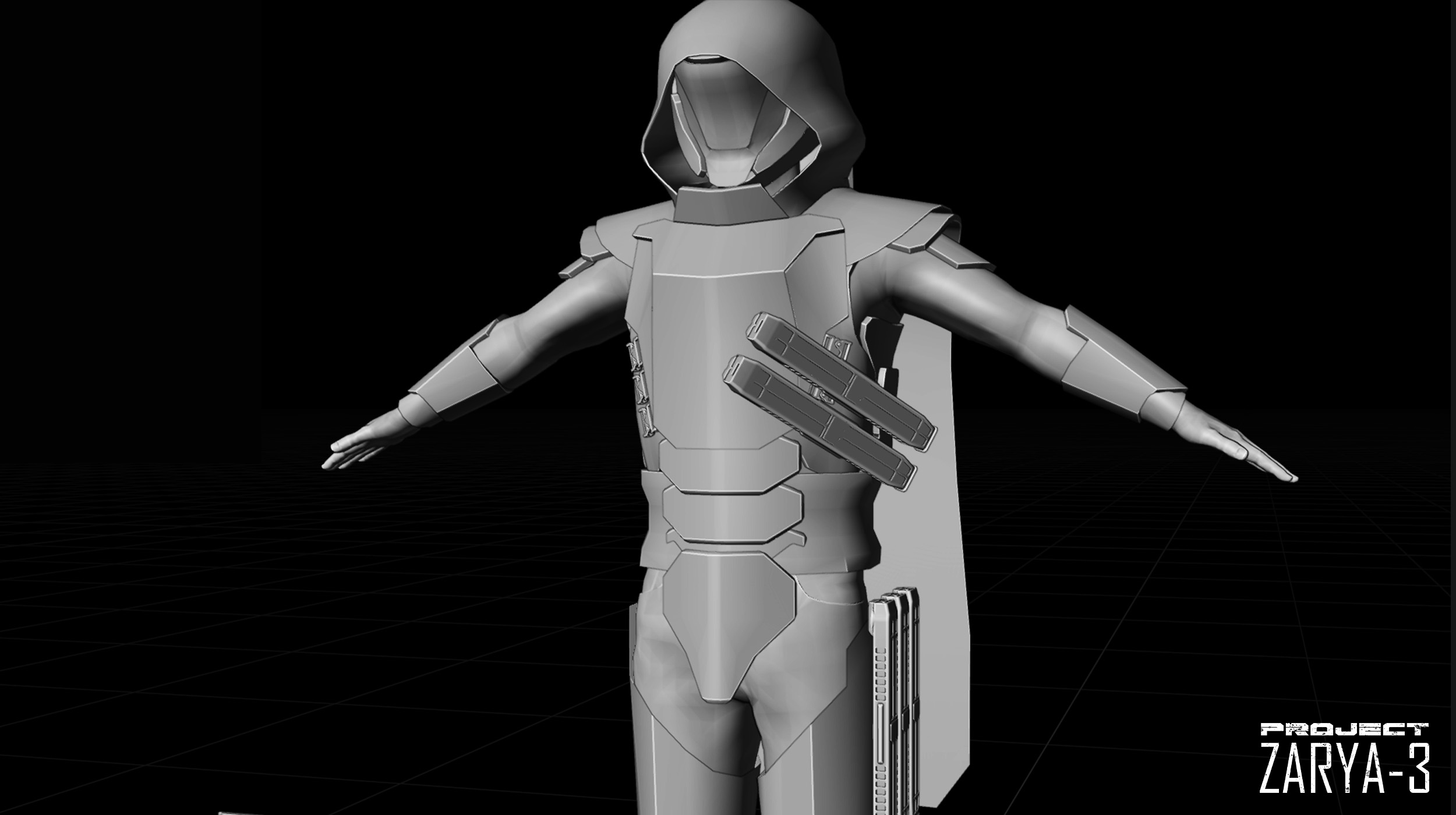
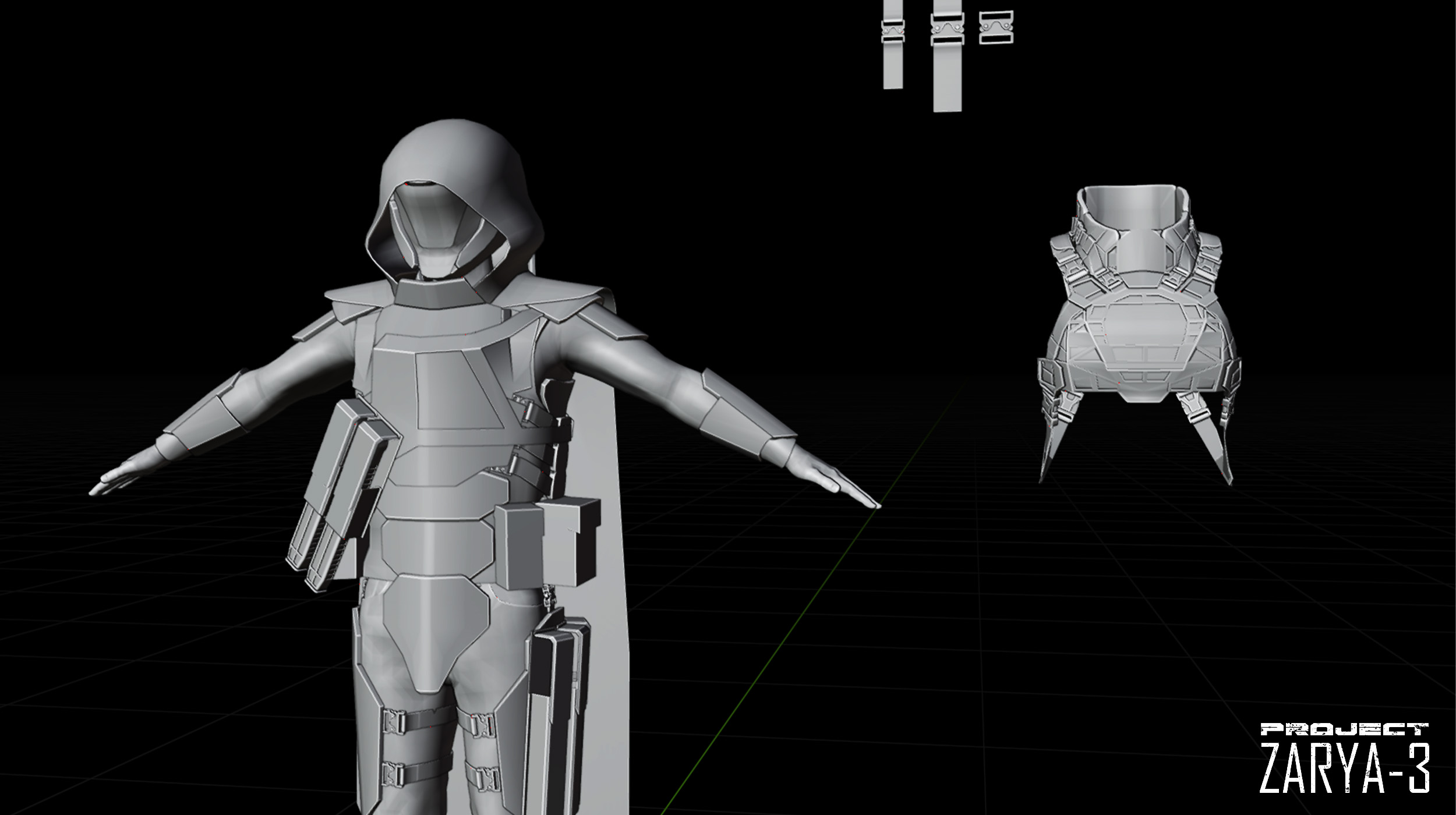
After figuring out the final shape of the helmet, I began to cut and morph the core parts of the Landfall Armor. Since this armor was supposed to be used as a comfortable full-body protection for extreme environments, I chose to proceed with the full-metal design of the hard surfaces.
I did consider adding interchangeable soft camouflage cover over the armored parts – so that a soldier could easily adjust their look according to the environment, but this idea felt too hard to decontaminate on the arrival back from the mission. So, instead I chose to proceed with multicam-alike paint for the hard armor and an optional cloak that can be adapted specifically to the mission environment.
After the neck protection of the hard armor got further extended on the sides, the tactical cloak had to be discarded, but it will come back in future iterations.
Imperial Landfall Armor is only the second armor I ever tried to make and the first of my armors that features a helmet and full protective gear.
To tackle the most intimidating challenge I started with figuring out the helmet design first. It feels kind of funny that after making six different designs I was still pretty lost and then my 3yo baby ran in the room.
I put them on my lap, and while cuddling I chose to do the last, seventh attempt for the day – ironically, this seventh design became the final design that I chose to develop. Sometimes high effort is only a warmup!