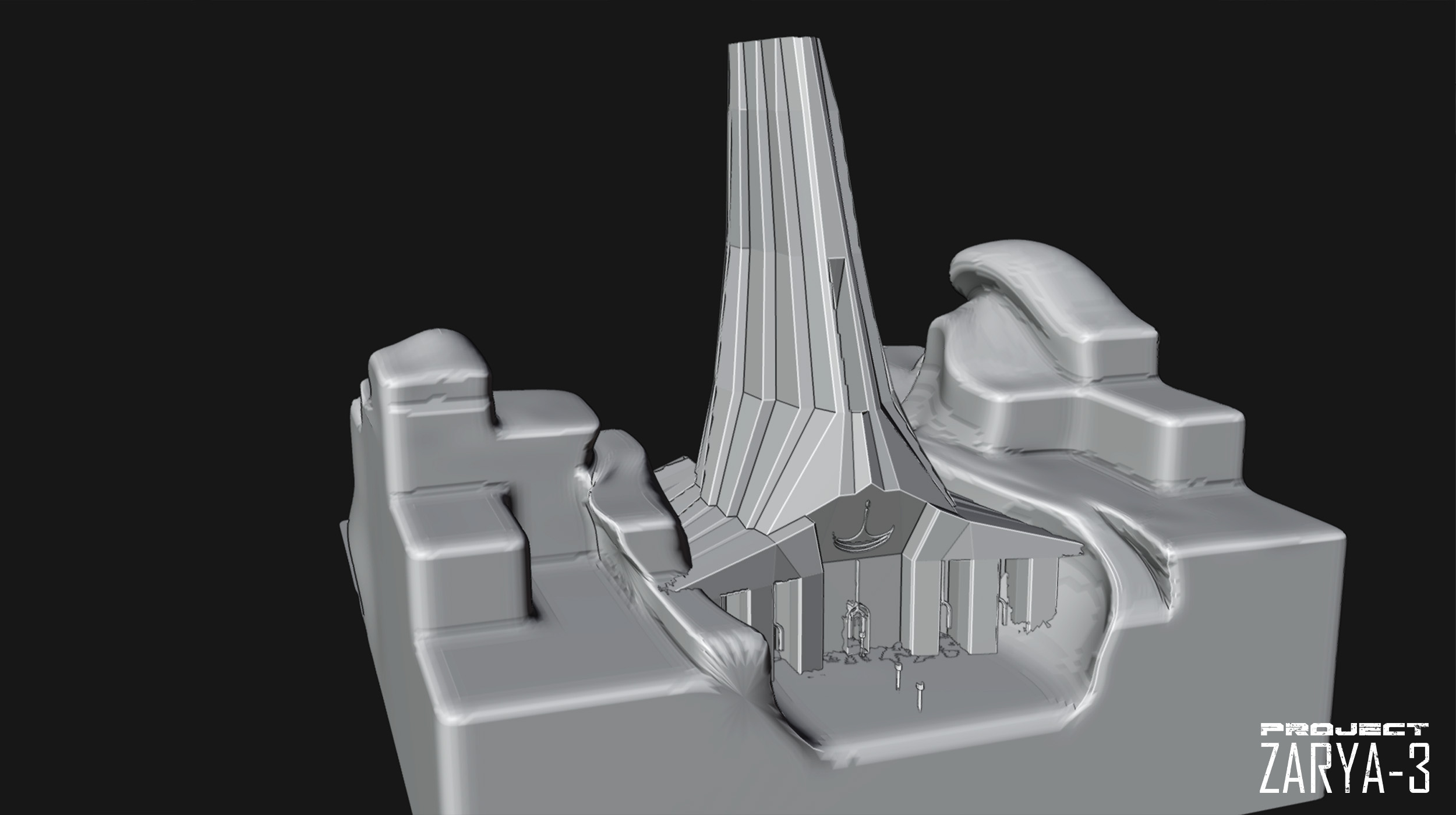

Temple of Water
This deliverable is very important for development of the style of pre-Imperial architecture.
A Peaceful Place Near the Roaring Waterfall
The White Temple is an ancient structure that is located on the coast, near the center of the Imperial Capitol. Creation of the White Temple goes all the way back to the First Samrajia and the rise of Oceanic Religion.
First the White Temple was merely a granite cave where acolytes could find a refuge and peacefully worship the water over a subterranean spring that went all the way through the cave and ended in a waterfall pouring down in the Southern Sea.
Later, a monastery grew around this cave and first carvings started to appear. When the Oceanic Religion became the most powerful faith on the Imperial homeworld, the Great Raja of southern valleys chose to turn the Sacred Cave into a White Temple and this way cement his legacy as the First Follower of the Ocean.
It took 50 years of work and 2000 artisans to turn the granite ridge above the Sacred Cave into the White Temple as it can be seen today. Unfortunately, Great Raja did not live long enough to see his grand project come to life. Fortunately, his heirs were more then willing to proceed with their father’s obsession.
The construction of the temple did not only include the carving of its shape: Many sophisticated mechanical systems were installed in place to reinforce the waterfall, prevent erosion and control the flooding of temple’s interior. Also an artificial pond was carved out near the waterfall in order to contain offerings that are later sent towards the Southern Sea.
Up until now the White Temple remains the prime place of worship for all followers of the Oceanic Religion across the imperial space. To keep this place from being overcrowded, no citizens below the First Class are allowed in the Temple and off-worldd visitors can only visit the temple by signing an appointment permit few months in advance.
Majestic White Grace With Deep Indian Influence
Early on when thinking about this temple, I thought about a thin white blade cutting through the dark rocky wall of the coast. Then the Idea behind the waterfall came in, and it was not from the faint of heart – I have imagined a ritual where grieving pilgrims place hundreds of small fire boats at the origins of the waterfall inside the temple, and when emerging with the streams of water, these fires would look like warm sparks floating out of this temple.
Being an autistic geek, I’m still thinking about the design of these fire boats: Should they have traditionally lit fires that are covered from the water? Should they have chemical flares that ignite from contact with water? Or, maybe instead of falling down with the waterfall, they should open up like Chinese lanterns and float away with the wind instead? All of these options are still under research.
Regarding the real life inspiration, I have been studying granite coastal cave formations to figure out the plausibility of this temple. Surprisingly, with right conditions (a tall enough ridge for the spire) such structure could be realistically carved – similarly to temples inside Bhaja Caves in India.
The traditional Indian architecture has also inspired the exterior of this temple. I used specifically Birla Mandir temple from Jaipur as reference when designing the spire and the backside of this building. To resolve the lighting problem I have added three light wells that are carved out in the temple’s spire: One for the dawn one for the midday sun and one for the dusk.
The interior of this temple is meant to be on the simpler side alike aforementioned Buddhist worshiping caves, since it’s also carved from the cave. There is a huge ceremonial pedestal inside this temple though, so I’m still experimenting between making it plausibly carved from granite, or making it a fully “artificial” addition made from metal or wood.
A Great Idea That Never Became a Priority
Development of this deliverable is currently pause because of its brief appearance in the upcoming stories. Still, it may get worked on and even completed “unexpectedly” as soon as I either get burnt out on the technical stuff or get a sweet tooth for architecture. Update pending…
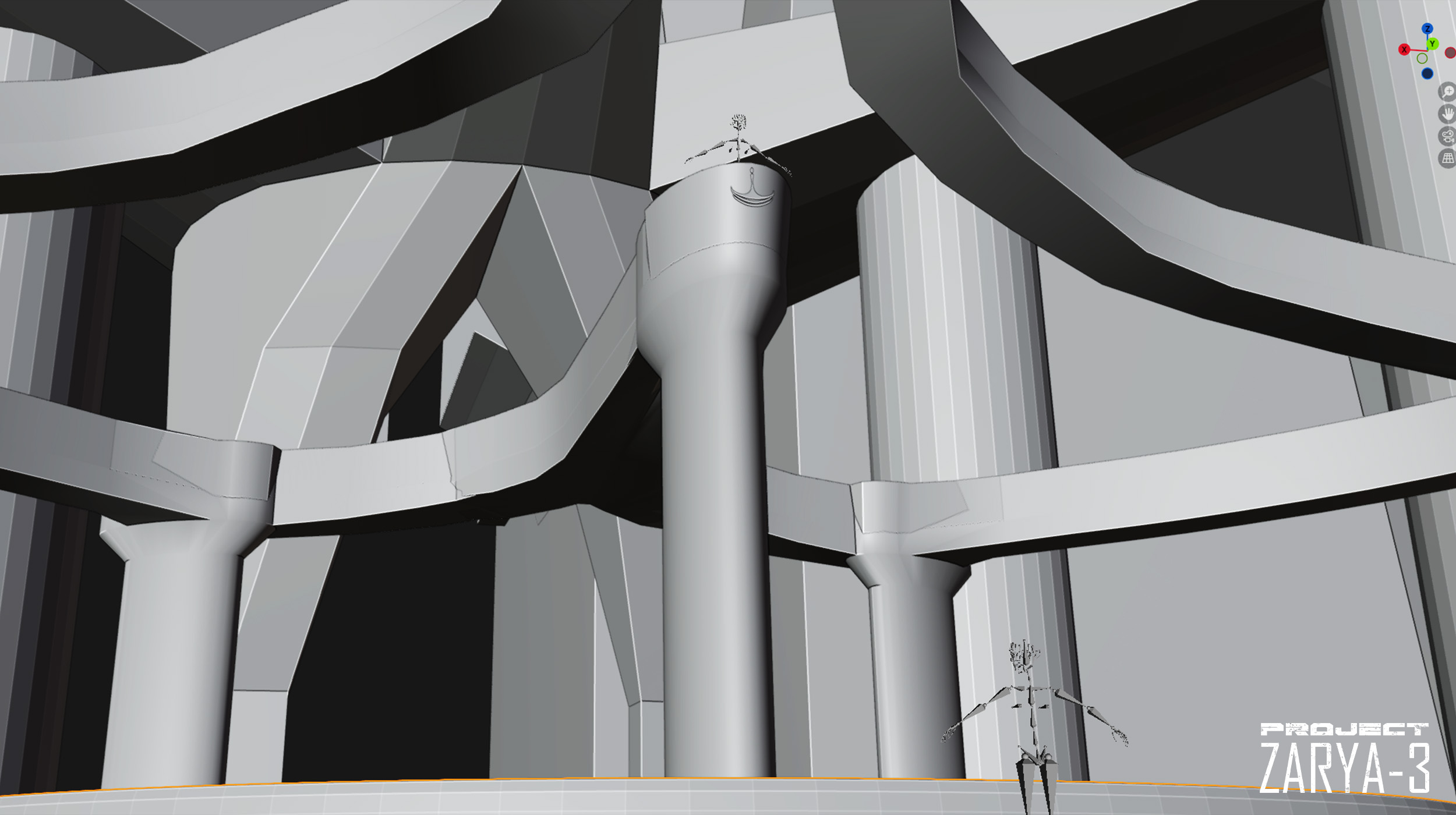
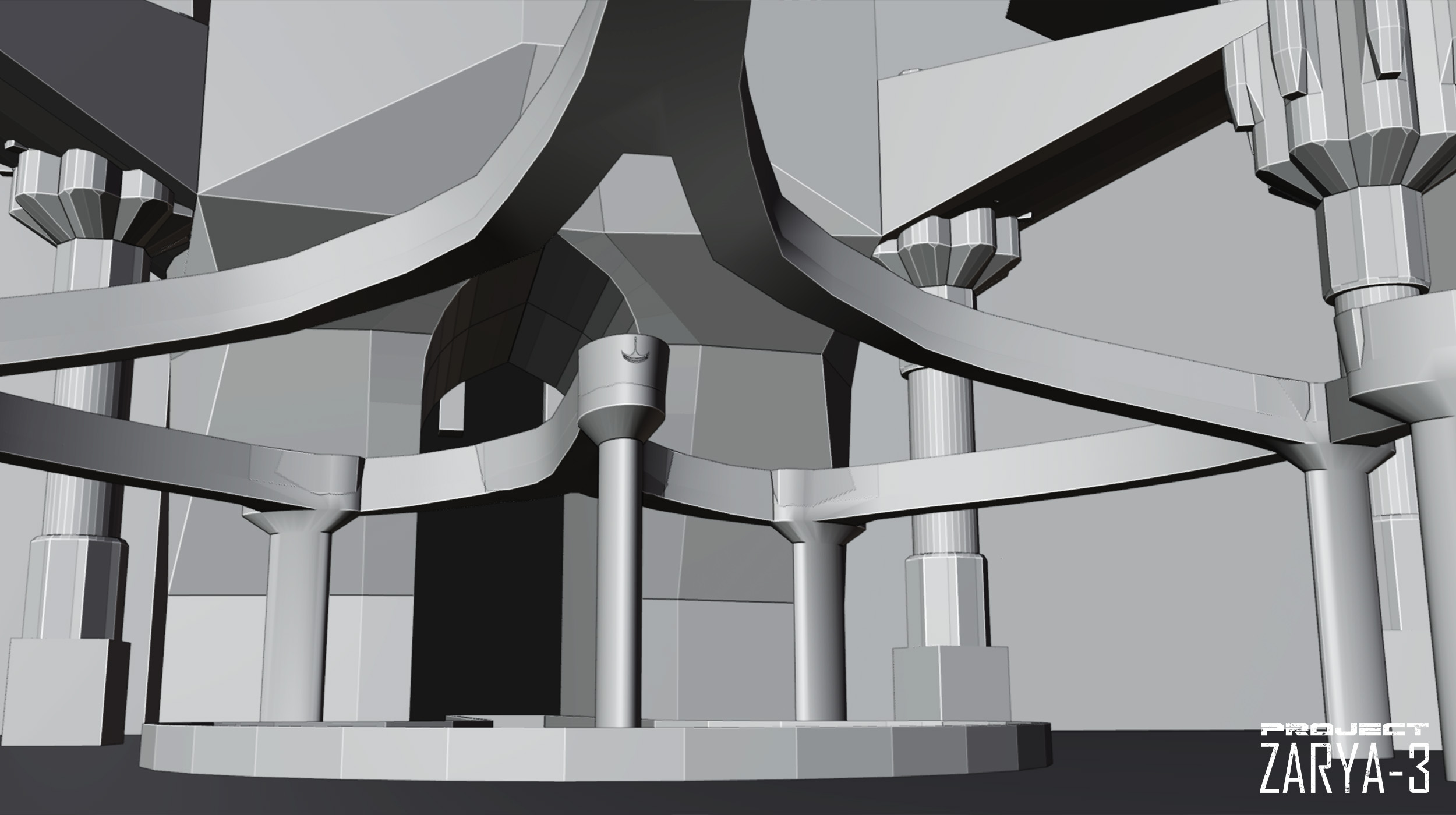
The interior of the White Temple was designed around two narrative tasks: First I wanted to show a religious ritual that is performed by the Princess above the ave-struck crowd. Second, I came up with this idea of a mourning ritual where pilgrims are laying small fire boats inside a pond and these boats immediately begin to flow towards the frontal waterfall that leads out from the temple.
For the ritual I have designed a pedestal in shape of the insignia of the Oceanic Religion. The Princess is meant to descend to the central balcony of this pedestal while her priestesses take positions on smaller balconies that extend around this construction.
Currently I’m also investigating vantage points for Imperial Bodyguards that are ready to mow down the crowd at the first sight of any danger.
The exterior of the White Temple became pretty straightforward to produce – the slim blade of its front side was morphed from a wider body that flows seamlessly into the coast ridge.
The height of this construction was capped mostly by common sense since it must be possible to carve from the rocks nearby. The coastal ridge itself is still a placeholder and is meant to be replaced by a more accurate model at a later date.